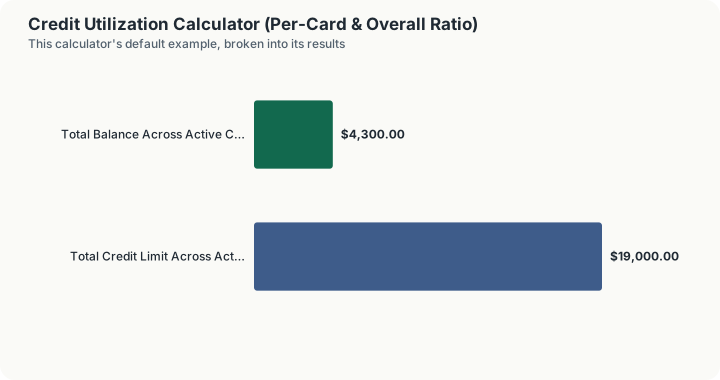
Quick Answer: Three cards with balances of $1,200, $2,800, and $300 against limits of $5,000, $4,000, and $10,000 produce an overall utilization of 22.6% ($4,300 of $19,000 available credit), landing in the "good" guidance tier. The second card alone sits at 70%, in the "poor" tier, even though the blended overall ratio looks fine.
Overview
Credit utilization is the percentage of your available revolving credit (mainly credit cards) that you are currently using: balance divided by limit. It is one of the most heavily weighted factors in both major consumer credit-scoring systems, FICO and VantageScore, ranking second only to payment history in most published breakdowns of what drives a score.
This calculator computes utilization two ways at once, because both matter:
- Overall utilization: total balances across all your cards divided by total limits across all your cards.
- Per-card utilization: each individual card's own balance-to-limit ratio.
Some published scoring guidance suggests that a single card sitting near its limit can carry its own negative weight even when your blended overall ratio looks moderate, which is why this calculator reports both the overall number and the single highest per-card ratio rather than only a blended average.
How This Is Calculated
For each card:
Overall utilization combines every active card's balance and limit before dividing, not an average of each card's percentage:
Card slots left at a $0 credit limit are treated as unused and excluded from both the per-card list and the overall calculation, which is how this calculator supports anywhere from 3 to 5 cards using one fixed set of card slots.
Each ratio, per-card and overall, is then mapped to a scoring-guidance tier:
| Utilization | Guidance Tier |
|---|---|
| Under 10% | Excellent |
| 10%-under 30% | Good |
| 30%-under 50% | Fair (starts hurting scores) |
| 50%+ | Poor (significant negative impact) |
Worked Example
Someone about to apply for a mortgage checks three cards, expecting the total to be what matters. It is the per-card figure that turns out to be the problem.
| Card | Balance | Limit | Utilization | Tier |
|---|---|---|---|---|
| Card 1 | $1,200 | $5,000 | 24.0% | Good |
| Card 2 | $2,800 | $4,000 | 70.0% | Poor |
| Card 3 | $300 | $10,000 | 3.0% | Excellent |
Step 1 -- Card 1 utilization. $1,200 / $5,000 = 24.0%
Step 2 -- Card 2 utilization. $2,800 / $4,000 = 70.0%
Step 3 -- Card 3 utilization. $300 / $10,000 = 3.0%
Step 4 -- Total balance across all active cards. $1,200 + $2,800 + $300 = $4,300
Step 5 -- Total limit across all active cards. $5,000 + $4,000 + $10,000 = $19,000
Step 6 -- Overall utilization. $4,300 / $19,000 = 22.6%, which lands in the Good tier
Step 7 -- Highest single-card utilization. Card 2 at 70.0%, which is the Poor tier
Steps 6 and 7 disagree, and that disagreement is the whole point of the page. The aggregate ratio looks comfortable because Card 3's unused $9,700 limit is doing the work of hiding Card 2. Moving $1,000 from Card 2 to Card 3 would leave step 6 completely untouched at 22.6% while dropping step 7 from 70.0% to 45.0%. Paying $1,000 off Card 2 outright improves both. The order in which balances are cleared matters, and clearing the smallest balance first, which is the instinctive move, is rarely the one that shifts these numbers most.
Why This Matters for Credit Scores
This is general, published FICO and VantageScore consumer guidance, not a guaranteed formula. Both companies' actual scoring models are proprietary, weigh utilization alongside many other factors (payment history, length of credit history, credit mix, recent inquiries, and more), and are not fully disclosed to the public. myFICO and Experian consumer education materials consistently describe utilization bands similar to the tiers used here, but neither company publishes an exact "X percentage points of utilization equals Y points of score" conversion, and this calculator cannot predict an exact score or an exact score change from any input.
What the general guidance does support:
- Under 10% is broadly described as excellent, associated with the strongest utilization-related scoring outcomes in published guidance.
- Under 30% is the most commonly cited "don't exceed" threshold in consumer credit education.
- 30%-50% is where most published guidance indicates utilization begins meaningfully working against a score.
- 50% and above is consistently flagged as carrying a significant negative impact in consumer guidance from major scoring companies and credit bureaus.
What This Does Not Account For
- Payment history, credit age, and credit mix. Utilization is one input among several major FICO/VantageScore scoring factors; this calculator isolates utilization only and does not model or predict a combined credit score.
- Statement-date timing. Card issuers typically report your balance to the bureaus on your statement closing date, not your current balance today; utilization reported to bureaus can differ from the live balance you enter here if you check between statement cycles.
- Installment loans. Utilization as scored here applies to revolving credit (credit cards, some lines of credit), not installment loans like auto loans or mortgages, which are scored differently.
- Per-card vs. overall weighting. Scoring models may weigh overall and per-card utilization differently, and the exact weighting is proprietary; this calculator reports both numbers but does not claim to know their relative scoring weight.
- Hard inquiries and new accounts. Opening a new card changes both your total available credit and (temporarily) your credit age and inquiry count; this calculator only computes the utilization ratio from the balances and limits you enter.
Common Pitfalls
- Looking only at the overall ratio. A single near-maxed card can matter on its own, even when the blended overall number looks fine, which is exactly the scenario in the worked example above.
- Closing a paid-off card. Closing a card removes its credit limit from your total, which can raise your overall utilization ratio even though you didn't add any new debt.
- Confusing "reported" balance with "current" balance. Because issuers commonly report to bureaus on the statement closing date, a big purchase paid off before the statement closes may never show up as utilization to the bureaus at all, while the same purchase left unpaid through the statement date will.
- Maxing out one card while others sit idle. Spreading the same total balance more evenly across available limits generally lowers both the highest single-card ratio and, often, the overall ratio.
- Assuming utilization is the only lever. Utilization is a meaningful factor, but on-time payment history is the single most heavily weighted factor in most published scoring breakdowns; paying down utilization does not offset a pattern of late payments.
Frequently Asked Questions
Is 0% utilization the best possible score outcome?
Does checking my own utilization or running this calculator affect my credit score?
How often should I check my utilization?
What's the fastest way to lower utilization?
Does this calculator tell me my actual credit score?
Sources
- Internal Revenue Service, the official authority for the tax rules this calculator relates to. irs.gov
Also consulted: myFICO: consumer education on credit utilization ratio and its role in FICO Score calculations; Experian: consumer education on credit utilization and VantageScore guidance on utilization bands; Both cited as general published scoring guidance, not a guaranteed or disclosed scoring formula.