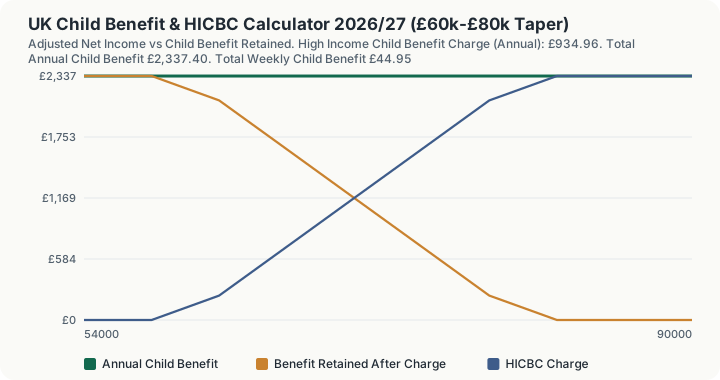
Quick Answer: A family with two children and a higher-earning partner on £68,000 adjusted net income receives £2,337.40 a year in Child Benefit, but faces a High Income Child Benefit Charge (HICBC) of £934.96 (a 40% clawback) -- leaving £1,402.44 net. Once that partner's income reaches £80,000, the charge equals the entire benefit and the family effectively receives nothing.
Overview
This calculator covers the UK High Income Child Benefit Charge (HICBC), a UK-wide (not England-only) tax charge administered by HMRC that claws back some or all of a household's Child Benefit once the higher-earning partner's income passes a set threshold. It is calculated for the 2025/26 and 2026/27 tax years, with every figure verified directly against gov.uk, since HMRC provides its own official HICBC calculator and users may well cross-check the result here against it.
Child Benefit itself pays £27.05 a week for the eldest or only child and £17.90 a week for each additional child, for 2026/27. The HICBC starts clawing this back once either partner's adjusted net income (broadly, total taxable income after certain deductions such as pension contributions and Gift Aid) exceeds £60,000 -- raised from £50,000 on 6 April 2024 -- and claws back the full amount once that partner's income reaches £80,000 -- raised from £60,000 on the same date. The key point is that the test is based on the higher-earning individual's own income, not combined household income: two partners each earning £55,000 (a £110,000 household) face no charge at all, while a single earner on £70,000 with a non-earning partner faces a substantial one.
How This Is Calculated
- Calculate the annual Child Benefit for the number of children claimed: the eldest/only child's weekly rate, plus each additional child's (lower) weekly rate, multiplied by 52 weeks.
- Identify the higher-earning partner's adjusted net income for the year -- this is the only figure that matters for the charge; the other partner's income is irrelevant.
- Check against the £60,000 threshold. At or below it, no charge applies at all.
- Between £60,000 and £80,000, taper the charge. For every complete £200 of income above £60,000, 1% of the Child Benefit is clawed back, up to a maximum of 100%.
- At £80,000 or above, the charge equals the entire benefit -- the family is still entitled to claim Child Benefit (which can protect National Insurance credits for the claiming parent), but the tax charge cancels out the cash value entirely.
Worked Example
2 children, higher earner on £68,000:
- Annual Child Benefit: (£27.05 + £17.90) × 52 = £44.95 × 52 = £2,337.40
- Excess over £60,000: £68,000 − £60,000 = £8,000
- Complete £200 steps: £8,000 ÷ £200 = 40 steps → 40% clawback
- HICBC: £2,337.40 × 40% = £934.96
- Net Child Benefit retained: £2,337.40 − £934.96 = £1,402.44
1 child, higher earner on £67,600 (HMRC's own published worked example):
- Annual Child Benefit: £27.05 × 52 = £1,406.60
- Excess over £60,000: £7,600 → 38 complete £200 steps → 38% clawback
- This matches HMRC's own published illustration of the taper mechanics precisely
Income below the threshold: £55,000:
- No charge at all -- the family keeps 100% of their Child Benefit
Income at or above £80,000:
- 100% clawback -- the charge exactly equals the Child Benefit received, so the net cash benefit is £0, though the claim itself can still be worth making for National Insurance credit purposes (see below)
What This Does Not Account For
- The option to opt out of receiving Child Benefit payments while still submitting the claim form, which avoids the need to pay the charge via Self Assessment but still protects the claiming parent's State Pension National Insurance credits -- a detail this calculator doesn't model as a separate choice.
- The previously-proposed move to a household-income basis, which was announced by the previous Government but has not been enacted; the charge remains based on the higher individual's income, not combined household income, for 2026/27.
- Adjusted net income adjustments for Gift Aid donations and pension contributions, which can reduce adjusted net income below gross salary and potentially pull a family below the £60,000 or £80,000 thresholds -- this calculator asks for the adjusted net income figure directly rather than calculating it from gross salary.
- Multiple Child Benefit claims within the same household in unusual family structures (e.g. blended families where children live with different combinations of parents across the year).
- How the charge is actually collected -- usually via Self Assessment, or an adjustment to the higher earner's PAYE tax code, both mechanically distinct from the amount calculated here.
Common Pitfalls
- Assuming the test is based on combined household income. It is not -- only the higher-earning individual partner's adjusted net income matters, which can produce very different outcomes for two households with identical combined income but different splits between partners.
- Missing the value of claiming even at 100% clawback. Some higher earners opt out of Child Benefit entirely once income exceeds £80,000, not realising the claim itself (even with payments stopped) still protects the claiming parent's National Insurance record -- relevant for a parent who has taken time out of paid work.
- Forgetting bonuses or one-off payments can push adjusted net income across a threshold. A partner comfortably under £60,000 most of the year can still trigger some charge if a bonus or one-off payment (like the sale of shares taxed as employment income) pushes that year's adjusted net income over the line.
- Not adjusting for pension contributions before checking the threshold. Increasing pension contributions (which reduce adjusted net income) can be an effective way to reduce or eliminate the charge for someone just over £60,000 or £80,000.
- Confusing the £200-per-1% taper with a smooth percentage. HMRC's method uses complete £200 steps, not a continuous formula, so the actual clawback percentage moves in whole-number jumps rather than smoothly with every pound of extra income.
Frequently Asked Questions
Whose income counts for the £60,000-£80,000 test?
What if my income fluctuates and I'm not sure which side of £60,000 or £80,000 I'll land on?
Does gov.uk have its own official calculator for this?
If I opt out of receiving payments, do I lose my National Insurance credits?
Were the £60,000 and £80,000 thresholds always this high?
Does it matter which parent actually claims Child Benefit?
What counts as a "partner" for this test?
Sources
- HM Revenue and Customs (HMRC), the official authority for the national tax authority this calculator relates to. gov.uk/government/organisations/hm-revenue-customs
Also consulted: GOV.UK: "High Income Child Benefit Charge" -- gov.uk/child-benefit-tax-charge; GOV.UK: "Child Benefit rates" -- gov.uk/child-benefit-rates; HM Treasury, Spring Budget 2024 (6 March 2024): threshold raised from £50,000 to £60,000 and full clawback point raised from £60,000 to £80,000, effective 6 April 2024.