How much UK dividend tax do you pay at each income tax band?
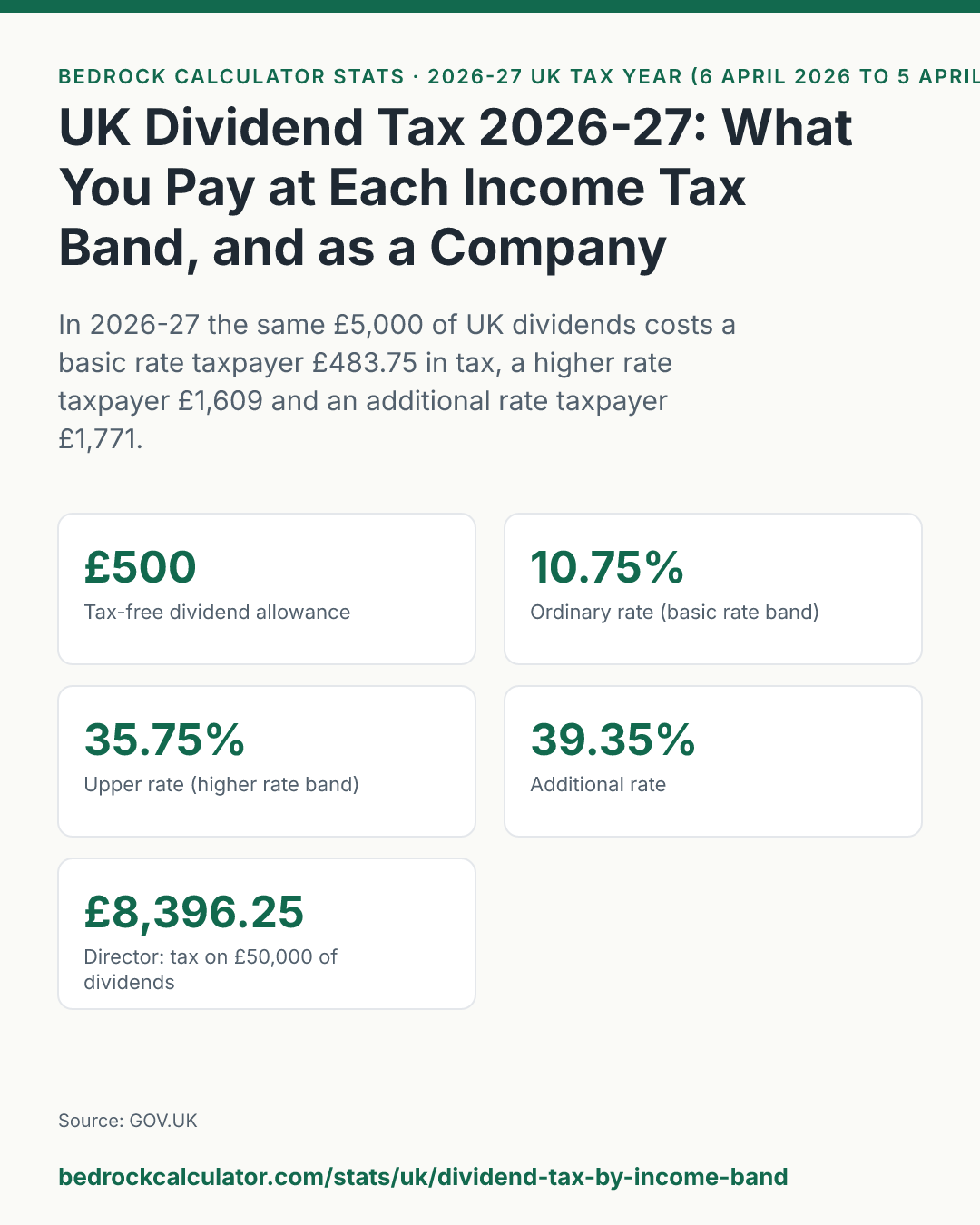
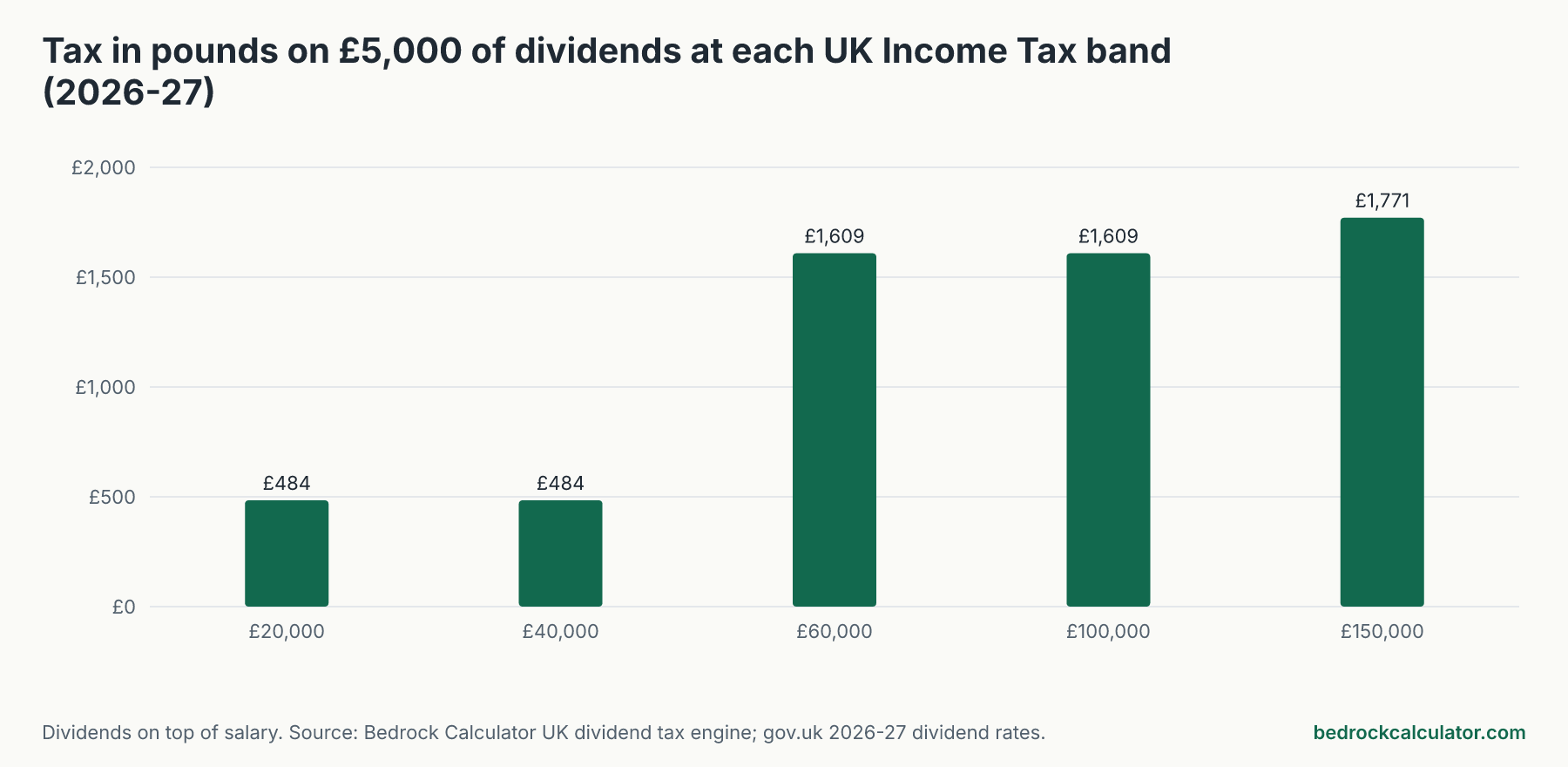
Dividend tax in the UK depends on which Income Tax band the dividends land in. In the 2026-27 tax year, the same £5,000 of dividends costs a basic rate taxpayer £483.75, a higher rate taxpayer £1,608.75 and an additional rate taxpayer £1,770.75.
The rates went up on 6 April 2026. After a £500 tax-free allowance, dividends are now taxed at 10.75% in the basic rate band, 35.75% in the higher rate band and 39.35% above that.
How we worked out these numbers
We ran the UK dividend tax calculator on this site in two ways.
First, we added £5,000 of dividends on top of five different salaries, from £20,000 to £150,000. That shows what an employee with a share portfolio outside an ISA would pay at each band.
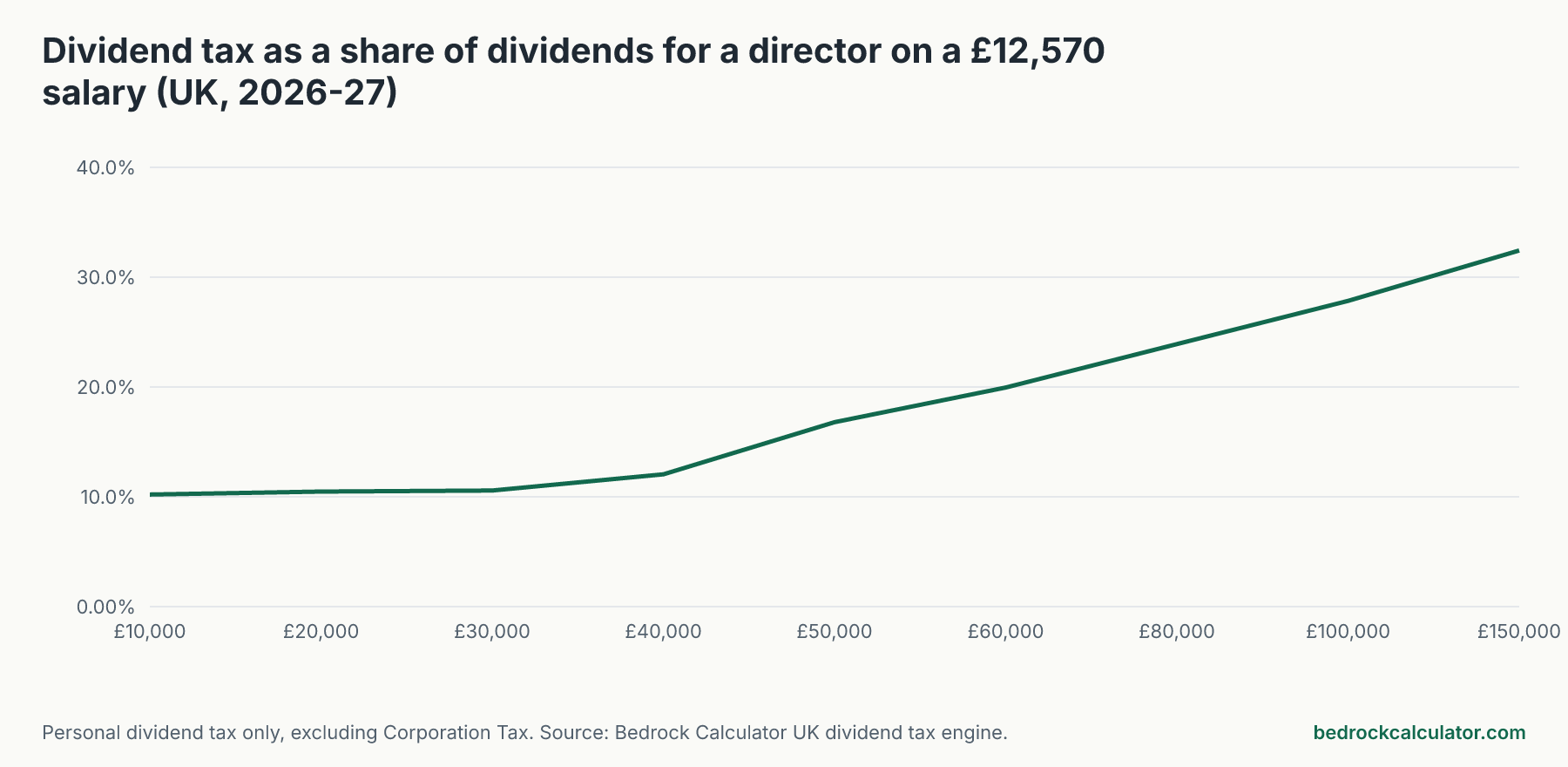
Second, we modelled a company director who pays themselves a salary of £12,570, the level of the Personal Allowance, and takes everything else as dividends, from £10,000 up to £150,000.
In both cases the calculator stacks dividends on top of other income, as HMRC does. Salary uses up the Personal Allowance and the bands first, and dividends fill whatever is left. The £500 allowance isn't extra room: it's taxed at nothing but still uses up part of the band it falls in.
What's left out: the calculator works out personal dividend tax only. A director's company has already paid Corporation Tax on the profit before it can pay a dividend, so the total tax on company earnings is higher than these figures. National Insurance doesn't apply to dividends, which is the main reason directors take them, but it does apply to any salary above the NI thresholds. Dividends held inside an ISA or pension aren't taxed at all and aren't part of these figures.
Tax on £5,000 of dividends at each income band
UK tax on £5,000 of dividends by Income Tax band, 2026-27
Download CSVDividends on top of a salary, England, Wales and NI. Pounds, rounded to the nearest pound. Dividend rates are the same in Scotland.
| Additional rate (£150,000 salary) | £1,771 | £3,229 | 35.4% |
| Basic rate (£20,000 salary) | £484 | £4,516 | 9.7% |
| Basic rate (£40,000 salary) | £484 | £4,516 | 9.7% |
| Higher rate (£100,000 salary) | £1,609 | £3,391 | 32.2% |
| Higher rate (£60,000 salary) | £1,609 | £3,391 | 32.2% |
A basic rate taxpayer keeps £4,516.25 of the £5,000. A higher rate taxpayer keeps £3,391.25. An additional rate taxpayer keeps £3,229.25, paying £1,287.00 more than the basic rate taxpayer on exactly the same dividends.
Notice that the £60,000 and £100,000 rows match. Both salaries leave the dividends fully inside the higher rate band, so the tax is identical. Where your dividends straddle two bands, you pay a blend of both rates.
Dividend tax for a company director
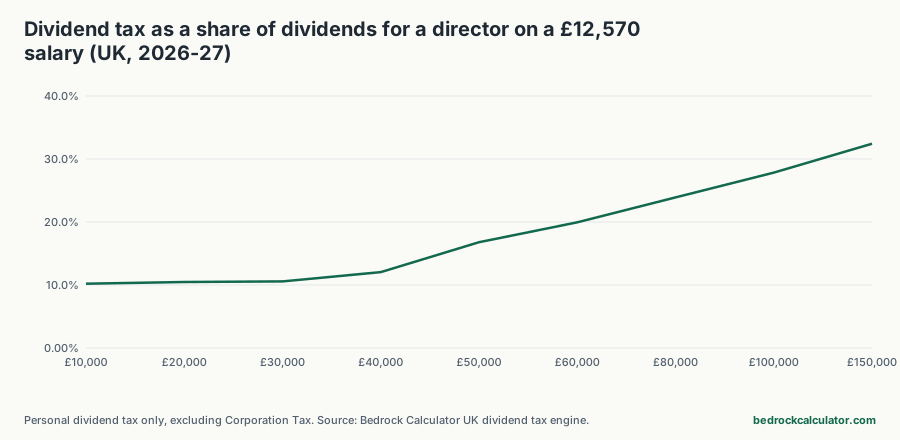
UK dividend tax for a company director on a £12,570 salary, 2026-27
Download CSVSalary at the Personal Allowance plus dividends. Dividend tax only, in pounds rounded to the nearest pound; Corporation Tax already paid by the company is not included.
| £10,000 | £1,021 | 10.2% | £9,500 | £0 | £0 |
| £20,000 | £2,096 | 10.5% | £19,500 | £0 | £0 |
| £30,000 | £3,171 | 10.6% | £29,500 | £0 | £0 |
| £40,000 | £4,821 | 12.1% | £37,200 | £2,300 | £0 |
| £50,000 | £8,396 | 16.8% | £37,200 | £12,300 | £0 |
| £60,000 | £11,971 | 20.0% | £37,200 | £22,300 | £0 |
| £80,000 | £19,121 | 23.9% | £37,200 | £42,300 | £0 |
| £100,000 | £27,843 | 27.8% | £30,915 | £68,585 | £0 |
| £150,000 | £48,636 | 32.4% | £24,630 | £87,440 | £37,430 |
The director model is how many owners of small limited companies pay themselves. With a £12,570 salary, there's no Income Tax on the salary, and the basic rate band is free for dividends.
On £40,000 of dividends the tax is £4,821.25, which is 12.1% of what was taken. The director keeps £35,179. Push dividends to £50,000 and part of the payout crosses into the higher rate band. £12,300 is now taxed at 35.75%, and the bill jumps to £8,396.25, or 16.8%.
The effective rate keeps climbing from there. It's 27.8% on £100,000 and 32.4% on £150,000, where the director pays £48,636 and keeps £101,364.
At £100,000 of dividends there's a second cost that's easy to miss. Total income is now above £100,000, so the Personal Allowance starts to shrink. Part of the £12,570 salary that was tax-free becomes taxable, adding £1,257 of Income Tax on the salary on top of the £27,843 of dividend tax. At £50,000 of dividends that extra cost is £0.
Why the 2026 rise matters
The ordinary and upper rates each rose by two percentage points from 6 April 2026. The additional rate didn't change. For a basic rate shareholder the change is modest in pounds. For a director taking a large dividend every year it adds up, because the higher rate band is where most of their dividend sits.
Do Scottish taxpayers pay different dividend tax?
No. Scotland sets its own rates on earnings, but dividends are taxed at the same UK rates everywhere. A Scottish taxpayer on £60,000 pays £1,608.75 on £5,000 of dividends, the same as anyone else on that salary. The Scottish bands affect only how much tax the salary itself carries.
Our table of UK take-home pay by salary shows how big that salary difference can be.
Ways people reduce dividend tax
Use an ISA. Dividends from shares held in a Stocks and Shares ISA are tax free and don't use up your allowance. The ISA allowance calculator shows how much room you have left this year.
Share ownership with a spouse. Each person has their own allowance and bands, so dividends paid to a spouse with lower income may be taxed less. This has to reflect genuine ownership.
Pension contributions. For a director, an employer pension contribution from the company is usually deductible for Corporation Tax and isn't taxed as a dividend.
Getting your own figure
Enter your salary and dividends in the UK dividend tax calculator for a band-by-band breakdown. If you run a company, pair it with the Corporation Tax calculator to see the tax on profits before the dividend is paid, and the UK income tax calculator for the salary side.