How much is your monthly take-home pay in the UK at each salary?
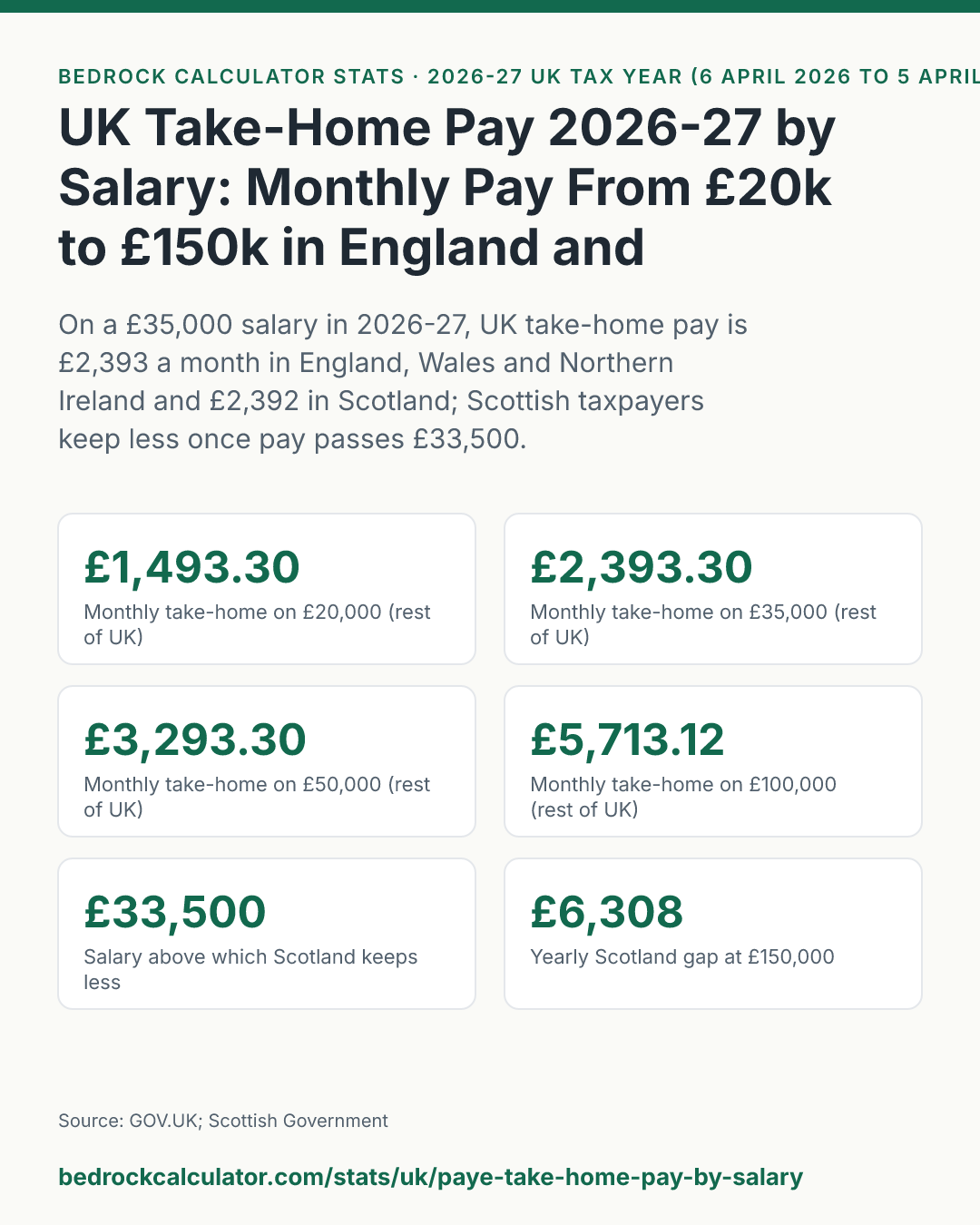
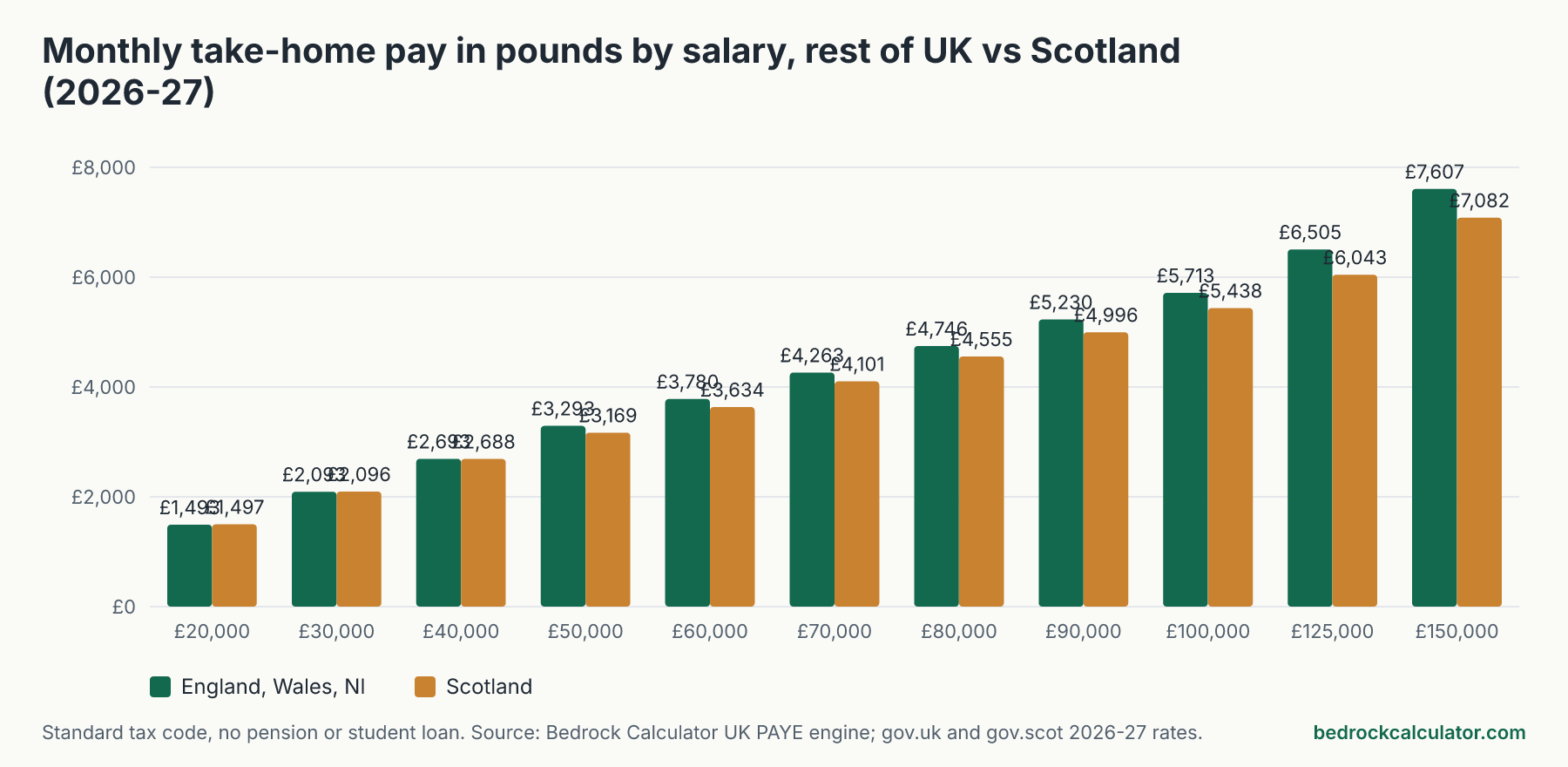
On a £35,000 salary in the 2026-27 tax year, an employee in England, Wales or Northern Ireland takes home £2,393.30 a month after Income Tax and National Insurance. In Scotland the same salary leaves £2,392.04. The two are close at that level, but they split apart quickly: on £50,000 the monthly figures are £3,293.30 and £3,168.63.
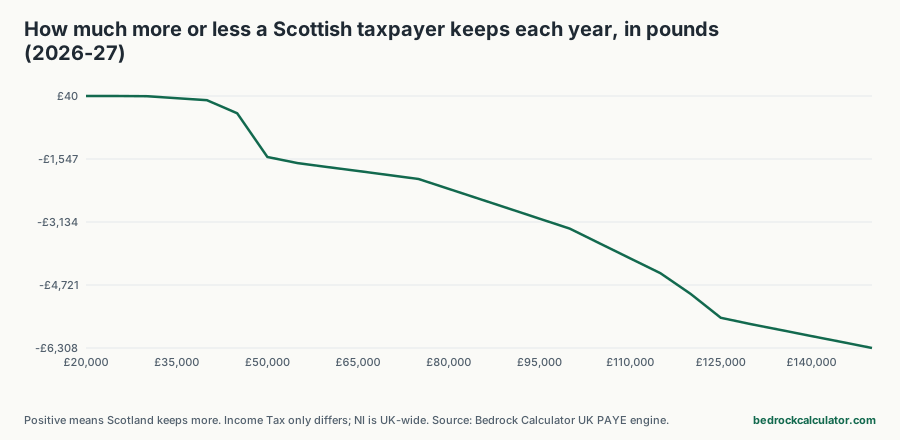
Scotland actually comes out slightly ahead at the bottom of the scale. Above £33,500 the advantage flips, and by £150,000 a Scottish taxpayer keeps £6,308 a year less than someone doing the same job in Manchester or Cardiff.
How we worked out these numbers
Every figure on this page comes from the UK take-home pay calculator on this site. We ran it at every £5,000 step from £20,000 to £150,000, once with the region set to England, Wales or Northern Ireland and once set to Scotland, and recorded what it returned.
The setup is the same in every run:
- An employee paid through PAYE on a standard tax code, with the full Personal Allowance before any taper
- 2026-27 Income Tax bands for the rest of the UK, and the six Scottish bands for Scotland
- Employee Class 1 National Insurance, which is the same in all four nations
- No pension contribution, no student loan, no benefits in kind
The monthly figure is the annual take-home divided by twelve, which is how the calculator reports it. The weekly column in the table is the annual figure divided by 52. We rounded the table to whole pounds so it's easier to scan; the figures in the text keep the pence.
What's left out matters. The calculator doesn't know your actual tax code, so a K code, an emergency code or a company car adjustment will change your number. It ignores savings interest, dividends and rental income. And because PAYE runs period by period, a bonus month or a job change partway through the year won't match a simple annual figure. Most employees also pay into a workplace pension, which this table deliberately leaves at zero so the salaries compare cleanly.
UK salary after tax, every £5,000 from £20k to £150k
Click any column heading to sort. All amounts are in pounds.
UK take-home pay 2026-27 by salary: England, Wales and NI vs Scotland
Download CSVStandard tax code, no pension, no student loan. Income Tax and employee Class 1 National Insurance only. Pounds, rounded to the nearest pound. Weekly is annual pay divided by 52.
| £20,000 | £17,920 | £1,493 | £345 | £17,959 | £1,497 | £40 |
| £25,000 | £21,520 | £1,793 | £414 | £21,559 | £1,797 | £40 |
| £30,000 | £25,120 | £2,093 | £483 | £25,155 | £2,096 | £35 |
| £35,000 | £28,720 | £2,393 | £552 | £28,705 | £2,392 | -£15 |
| £40,000 | £32,320 | £2,693 | £622 | £32,255 | £2,688 | -£65 |
| £45,000 | £35,920 | £2,993 | £691 | £35,524 | £2,960 | -£396 |
| £50,000 | £39,520 | £3,293 | £760 | £38,024 | £3,169 | -£1,496 |
| £55,000 | £42,457 | £3,538 | £816 | £40,807 | £3,401 | -£1,650 |
| £60,000 | £45,357 | £3,780 | £872 | £43,607 | £3,634 | -£1,750 |
| £65,000 | £48,257 | £4,021 | £928 | £46,407 | £3,867 | -£1,850 |
| £70,000 | £51,157 | £4,263 | £984 | £49,207 | £4,101 | -£1,950 |
| £75,000 | £54,057 | £4,505 | £1,040 | £52,007 | £4,334 | -£2,050 |
| £80,000 | £56,957 | £4,746 | £1,095 | £54,657 | £4,555 | -£2,300 |
| £85,000 | £59,857 | £4,988 | £1,151 | £57,307 | £4,776 | -£2,550 |
| £90,000 | £62,757 | £5,230 | £1,207 | £59,957 | £4,996 | -£2,800 |
| £95,000 | £65,657 | £5,471 | £1,263 | £62,607 | £5,217 | -£3,050 |
| £100,000 | £68,557 | £5,713 | £1,318 | £65,257 | £5,438 | -£3,300 |
| £105,000 | £70,457 | £5,871 | £1,355 | £66,782 | £5,565 | -£3,675 |
| £110,000 | £72,357 | £6,030 | £1,391 | £68,307 | £5,692 | -£4,050 |
| £115,000 | £74,257 | £6,188 | £1,428 | £69,832 | £5,819 | -£4,425 |
| £120,000 | £76,157 | £6,346 | £1,465 | £71,212 | £5,934 | -£4,946 |
| £125,000 | £78,057 | £6,505 | £1,501 | £72,512 | £6,043 | -£5,546 |
| £130,000 | £80,686 | £6,724 | £1,552 | £74,978 | £6,248 | -£5,708 |
| £135,000 | £83,336 | £6,945 | £1,603 | £77,478 | £6,457 | -£5,858 |
| £140,000 | £85,986 | £7,166 | £1,654 | £79,978 | £6,665 | -£6,008 |
| £145,000 | £88,636 | £7,386 | £1,705 | £82,478 | £6,873 | -£6,158 |
| £150,000 | £91,286 | £7,607 | £1,756 | £84,978 | £7,082 | -£6,308 |
At the low end you keep most of what you earn. On £20,000 the take-home is £17,920 a year, or 89.6% of gross pay. On £50,000 it's £39,520, which is 79.0%. By £100,000 the share falls to 68.6%, and at £150,000 it's 60.9%.
The drop isn't smooth. It steepens past the higher rate threshold, and again between £100,000 and £125,140, where the Personal Allowance is withdrawn. We cover that band in detail in our piece on the UK tax trap above £100,000, including the marginal rate at each salary.
How much is £35,000 after tax a month?
On £35,000 the calculator returns £28,720 a year in England, Wales or Northern Ireland. That's £2,393.30 a month, or about £552.30 a week. The deductions are £4,486 of Income Tax and £1,794 of National Insurance.
In Scotland the figure is £28,705, almost the same. That near tie is a coincidence of where the Scottish bands fall, and it doesn't last.
Scotland vs England take-home pay at every salary
Scotland sets its own Income Tax bands and rates on earnings. National Insurance isn't devolved, so every difference in the table is Income Tax.
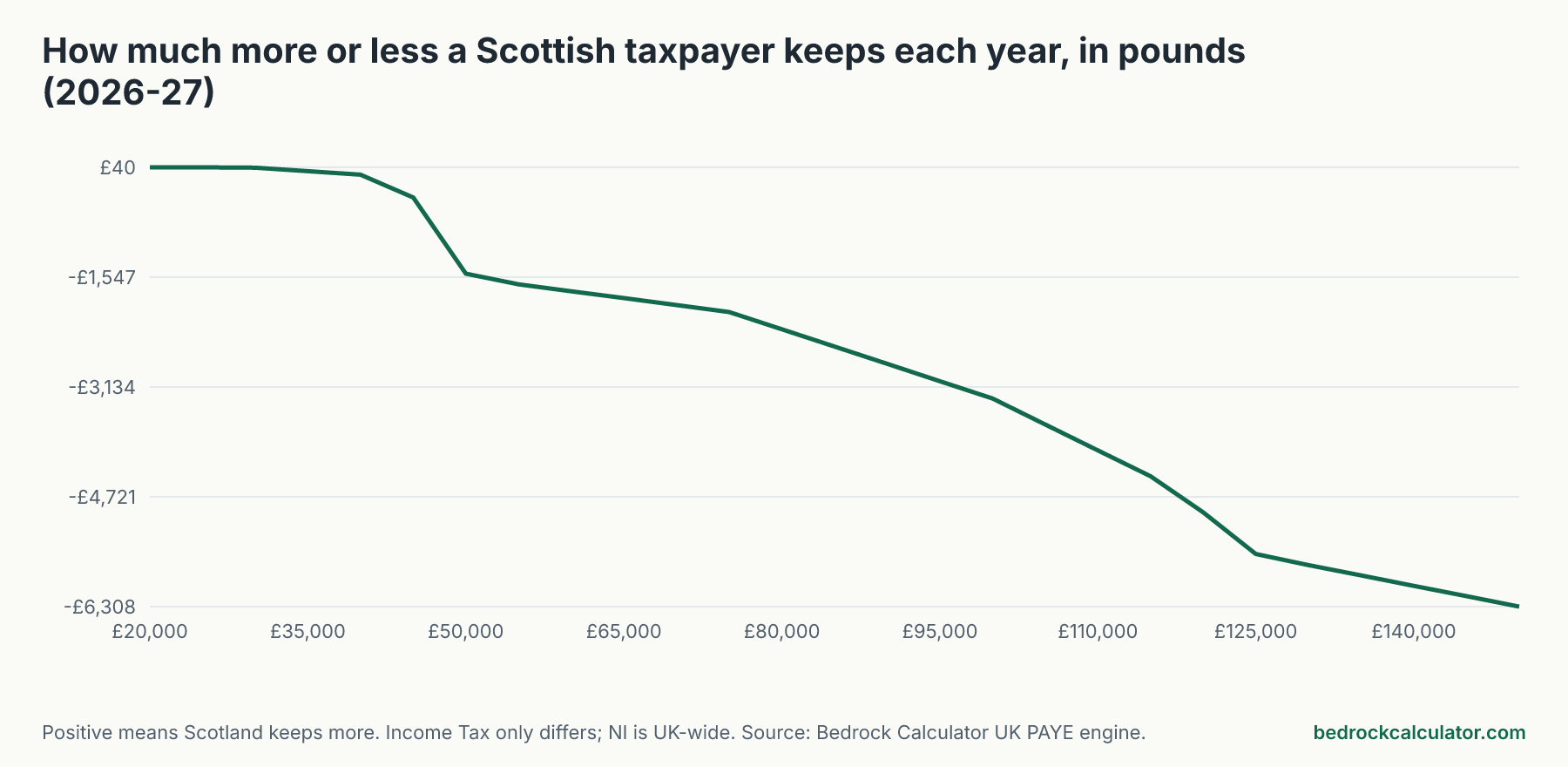
At the bottom of the range, Scotland's starter rate is a little lower than the basic rate elsewhere, so a Scottish taxpayer keeps slightly more. The biggest gain in our range is £39.67 a year, at £20,000. That's small enough to disappear into a single pay rise.
Higher up, Scotland's intermediate rate is a point above the basic rate elsewhere, and it slowly eats that starter-rate saving. By £33,500 the saving is gone and the gap turns the other way. It widens sharply once the Scottish higher rate starts, well before the point where the rest of the UK moves to its own higher rate. That's why the gap jumps around £45,000 to £50,000 in the chart: on £50,000 a Scottish taxpayer is £1,496 a year behind, about £124.67 a month.
From there the shortfall keeps growing. It's £2,050 at £75,000 and £6,308 at £150,000. On £150,000 a Scottish taxpayer keeps 56.7% of gross pay, against 60.9% elsewhere.
Monthly take-home pay at £50k, £75k and £100k
For the three salaries people search for most, here are the monthly figures side by side:
- £50,000: £3,293.30 a month in England, Wales or Northern Ireland, £3,168.63 in Scotland
- £75,000: £4,504.78 a month, against £4,333.95 in Scotland
- £100,000: £5,713.12 a month, against £5,438.11 in Scotland
Most people on these salaries have a workplace pension, so their payslip will show less than this. A pension paid through salary sacrifice cuts both Income Tax and National Insurance, and our salary sacrifice calculator shows what that does to your monthly pay.
What will change your own figure
These numbers are a fair way to compare salaries and nations, not a payslip. Four things move the real figure most often:
A student loan. Plan 2, Plan 5 and the others take a slice of pay above their own thresholds, on top of tax and NI. The student loan repayment calculator shows the yearly amount for each plan.
A pension. Workplace schemes take a share of salary before you see it. How much tax relief you get depends on the type of scheme.
Your tax code. Benefits in kind, untaxed income from last year or a second job can all shrink your allowance through the code.
Where HMRC thinks you live. Scottish rates apply if your main home is in Scotland, whatever the address of your employer.
Getting your own number
Open the UK take-home pay calculator, enter your salary and pick your region, and add a pension percentage or student loan plan if you have one. To see how the Income Tax part is built up band by band, use the UK income tax calculator, and for the NI part on its own, the National Insurance calculator.