How much do you take home in the UK, and where is the 60% tax trap?
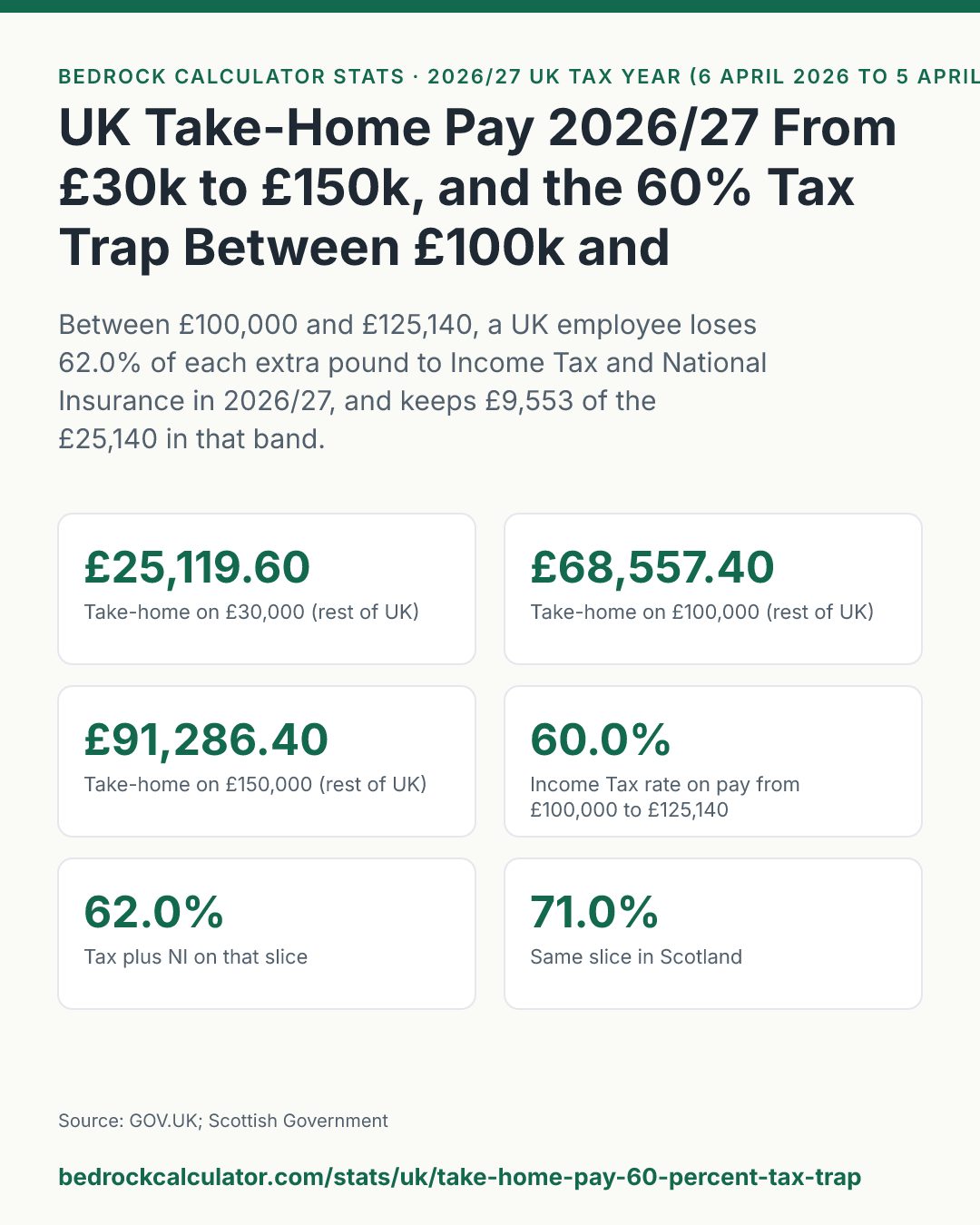
On a £30,000 salary in England, Wales or Northern Ireland you take home £25,119.60 in the 2026/27 tax year, about £2,093.30 a month. On £100,000 it's £68,557.40, and on £150,000 it's £91,286.40.
The strange part sits in the middle. Between £100,000 and £125,140, each extra pound of salary loses 62.0% to Income Tax and National Insurance. Of the £25,140 you earn in that band, you keep £9,553.20. That's the so-called 60% tax trap, and it's worse in Scotland, at 71.0% across the same slice.
How we worked out these numbers
Every figure here comes from running the UK take-home pay calculator on this site at twelve salaries from £30,000 to £150,000, once for the rest of the UK and once for Scotland. We recorded what it returned and did nothing else to the numbers.
The setup is the same in every run:
- An employee on a standard tax code with the full £12,570 Personal Allowance before any taper
- 2026/27 Income Tax bands for England, Wales and Northern Ireland, and the six Scottish bands for Scotland
- Employee Class 1 National Insurance, which is the same across the whole UK
- No student loan, no pension contribution, no benefits in kind
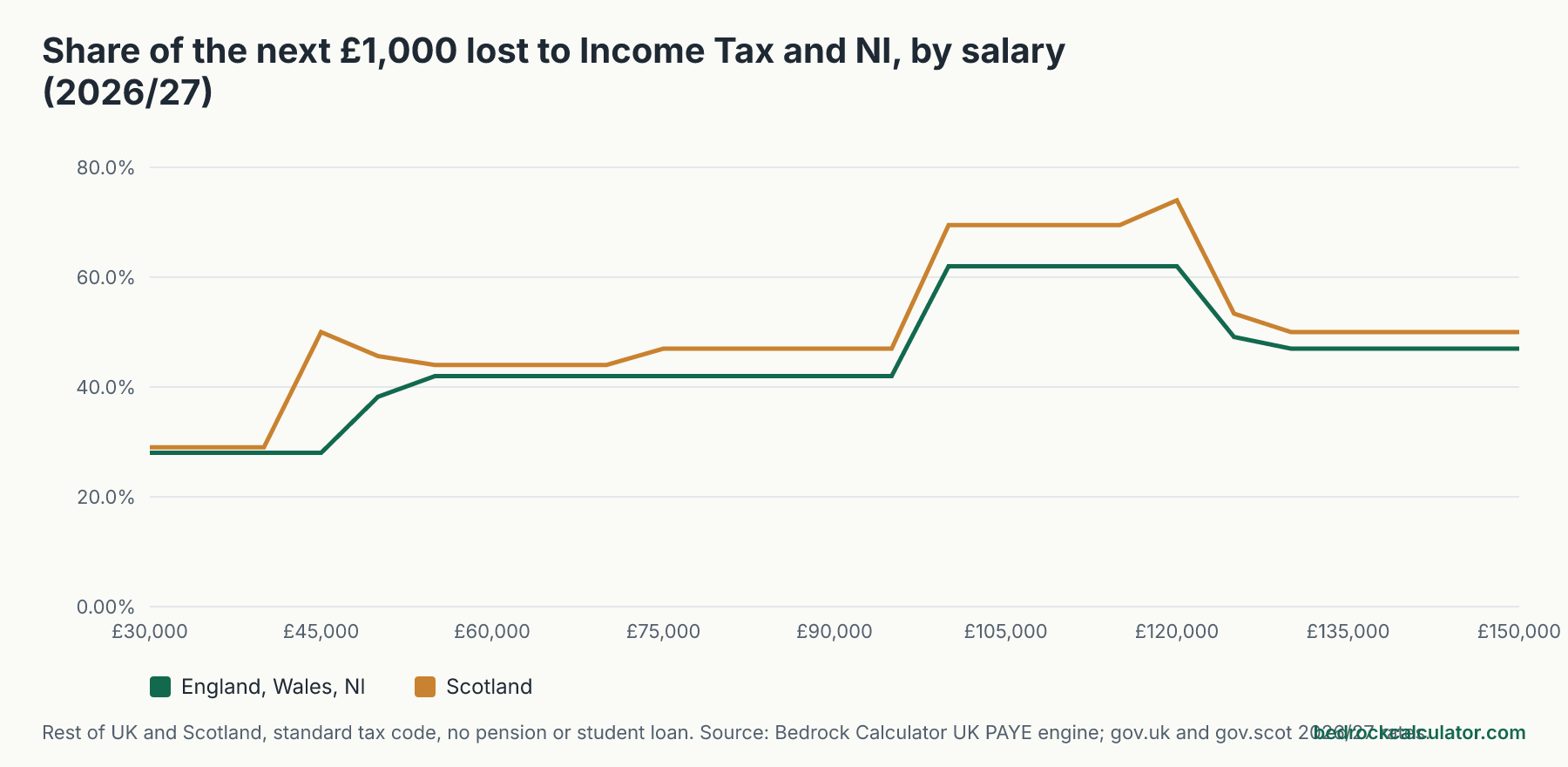
The "marginal rate" column is the share of the next £1,000 of salary that disappears into tax and NI. We got it by running the calculator at the salary and again £1,000 higher and comparing the take-home.
What the calculator leaves out matters. It doesn't know your actual tax code, so a K code, an emergency code or an adjustment for a company car will change your number. It ignores savings interest, dividends and rental income, which are taxed under their own rules. And PAYE works month by month, so a bonus month or a job change partway through the year won't match a simple annual figure.
UK salary after tax and National Insurance, £30k to £150k
Click any column heading to sort. All amounts are in pounds.
UK take-home pay 2026/27, £30,000 to £150,000 (England, Wales, NI and Scotland)
Download CSVEmployee on a standard tax code, no student loan, no pension. Income Tax and employee Class 1 National Insurance only. Amounts in pounds sterling. Marginal rate is the share of the next £1,000 lost to tax and NI.
| £30,000 | £3,486 | £1,394.40 | £25,119.60 | £2,093.30 | 16.3% | 28.0% | £25,154.53 |
| £40,000 | £5,486 | £2,194.40 | £32,319.60 | £2,693.30 | 19.2% | 28.0% | £32,254.53 |
| £50,000 | £7,486 | £2,994.40 | £39,519.60 | £3,293.30 | 21.0% | 38.2% | £38,023.55 |
| £60,000 | £11,432 | £3,210.60 | £45,357.40 | £3,779.78 | 24.4% | 42.0% | £43,607.35 |
| £70,000 | £15,432 | £3,410.60 | £51,157.40 | £4,263.12 | 26.9% | 42.0% | £49,207.35 |
| £80,000 | £19,432 | £3,610.60 | £56,957.40 | £4,746.45 | 28.8% | 42.0% | £54,657.35 |
| £90,000 | £23,432 | £3,810.60 | £62,757.40 | £5,229.78 | 30.3% | 42.0% | £59,957.35 |
| £100,000 | £27,432 | £4,010.60 | £68,557.40 | £5,713.12 | 31.4% | 62.0% | £65,257.35 |
| £110,000 | £33,432 | £4,210.60 | £72,357.40 | £6,029.78 | 34.2% | 62.0% | £68,307.35 |
| £120,000 | £39,432 | £4,410.60 | £76,157.40 | £6,346.45 | 36.5% | 62.0% | £71,211.55 |
| £125,140 | £42,516 | £4,513.40 | £78,110.60 | £6,509.22 | 37.6% | 47.0% | £72,547.95 |
| £150,000 | £53,703 | £5,010.60 | £91,286.40 | £7,607.20 | 39.1% | 47.0% | £84,977.95 |
A few things stand out. At £30,000 and £40,000 the marginal rate is 28.0%: basic rate Income Tax plus the main rate of NI. Once you cross into the higher rate band, it rises to 42.0%, because NI drops to its lower rate just as Income Tax doubles. That higher rate holds steady through £90,000 at 42.0%.
Then it jumps.
Why £100,000 to £125,140 is taxed so hard
Everyone gets a £12,570 Personal Allowance, the slice of income that isn't taxed at all. Once your adjusted net income passes £100,000, you lose £1 of that allowance for every £2 you earn above the line. By £125,140, the allowance is gone.
So an extra £1 of salary in that band does two things. It's taxed at the 40p higher rate. And it drags another 50p of previously tax-free income into tax, also at 40p. That's 60p of Income Tax on a pound, which is where the 60.0% figure comes from. NI adds its own share on top, giving 62.0% in total.
In money terms: on the £25,140 between £100,000 and £125,140, you hand over £15,586.80 and keep £9,553.20.
Once the allowance is fully gone, the trap ends. Above £125,140 you pay the additional rate, and the marginal rate falls back to 47.0%. That's the odd shape of UK tax: someone on £130,000 pays a lower rate on their next pound than someone on £110,000, who faces 62.0%.
How much is £100k after tax in the UK?
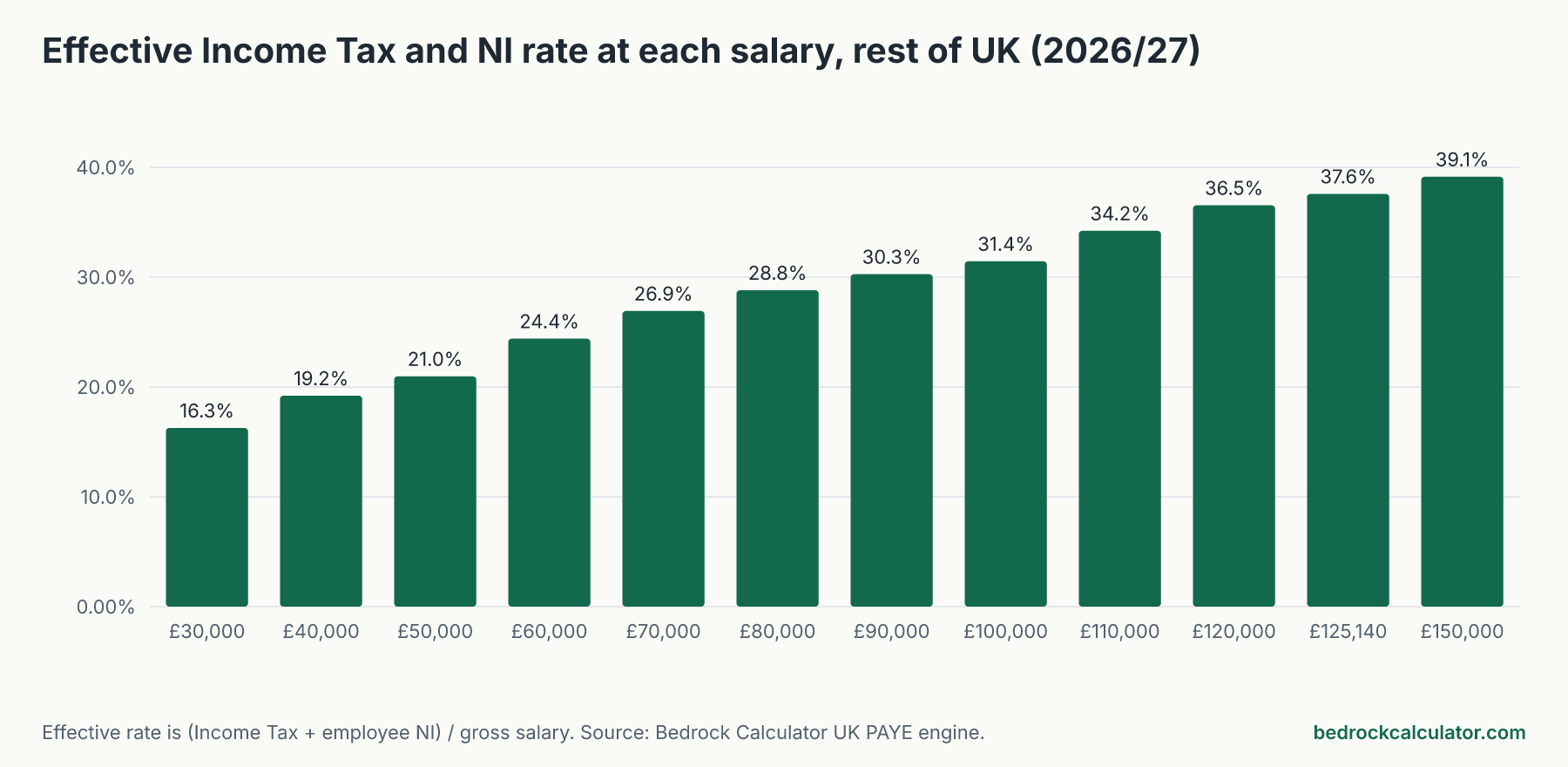
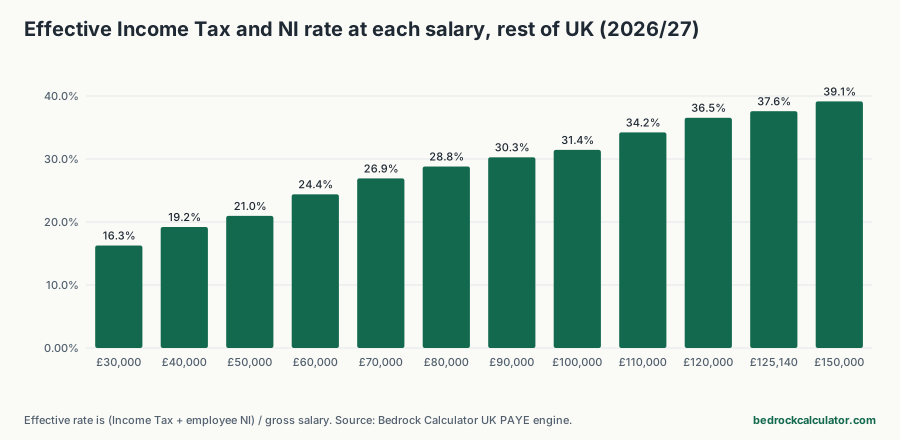
On £100,000 the calculator returns £68,557.40 a year, or £5,713.12 a month. The deductions are £27,432.00 of Income Tax and £4,010.60 of National Insurance, an effective rate of 31.4%.
Compare that with the bottom of the table. At £30,000 the effective rate is 16.3%, and at £150,000 it's 39.1%. A raise from £100,000 to £150,000 is £50,000 on paper, and £22,729.00 in your account.
Scotland vs England take-home pay
Scotland sets its own Income Tax bands, while NI is the same everywhere. At the lowest salary here Scotland's starter rate makes a small difference in the other direction: at £30,000 a Scottish taxpayer keeps £25,154.53, a touch more than in England. Above that the picture flips. The gap is £1,496.05 a year at £50,000, £3,300.05 at £100,000 and £6,308.45 at £150,000, all in favour of the rest of the UK.
The taper hits harder in Scotland too. The same allowance withdrawal applies, but on top of Scotland's higher rates, and as the allowance shrinks the top rate starts sooner. Across the whole band from £100,000 to £125,140, a Scottish taxpayer loses 71.0% of each extra pound, and the marginal rate at £110,000 is 69.5%.
How people avoid the 60 percent tax rate
The taper is measured on adjusted net income, not gross salary. That opens a few doors.
Pension contributions. Paying into a pension reduces adjusted net income, so inside the band every £2 you contribute wins back £1 of allowance. For anyone sitting in the band, this is the most common fix.
Salary sacrifice. Giving up salary in exchange for an employer pension contribution lowers gross pay itself, which saves NI as well as Income Tax. The salary sacrifice calculator shows the effect on your own numbers.
Gift Aid. Charitable donations under Gift Aid also reduce adjusted net income.
If you try this in the take-home calculator, enter the gross contribution and pick how your scheme gives relief. Under relief at source it takes from your pay only the part your provider does not claim back from HMRC as basic rate relief, and it gives the rest of your higher rate relief through the extended tax bands.
Getting your own figure
These numbers are a fair guide to how UK tax behaves across salaries, not a payslip. Your real take-home will move with a student loan, workplace pension, benefits in kind, a non-standard tax code or income outside your job.
To get your own number, open the UK take-home pay calculator, enter your salary, region and any pension or student loan plan. For the tax alone, the UK income tax calculator breaks the bill down band by band, and the National Insurance calculator does the same for NI. If the difference between your top rate and your average rate is confusing, our guide to marginal vs effective tax rates explains why both matter.