Who gains from the UK Marriage Allowance, and how much?
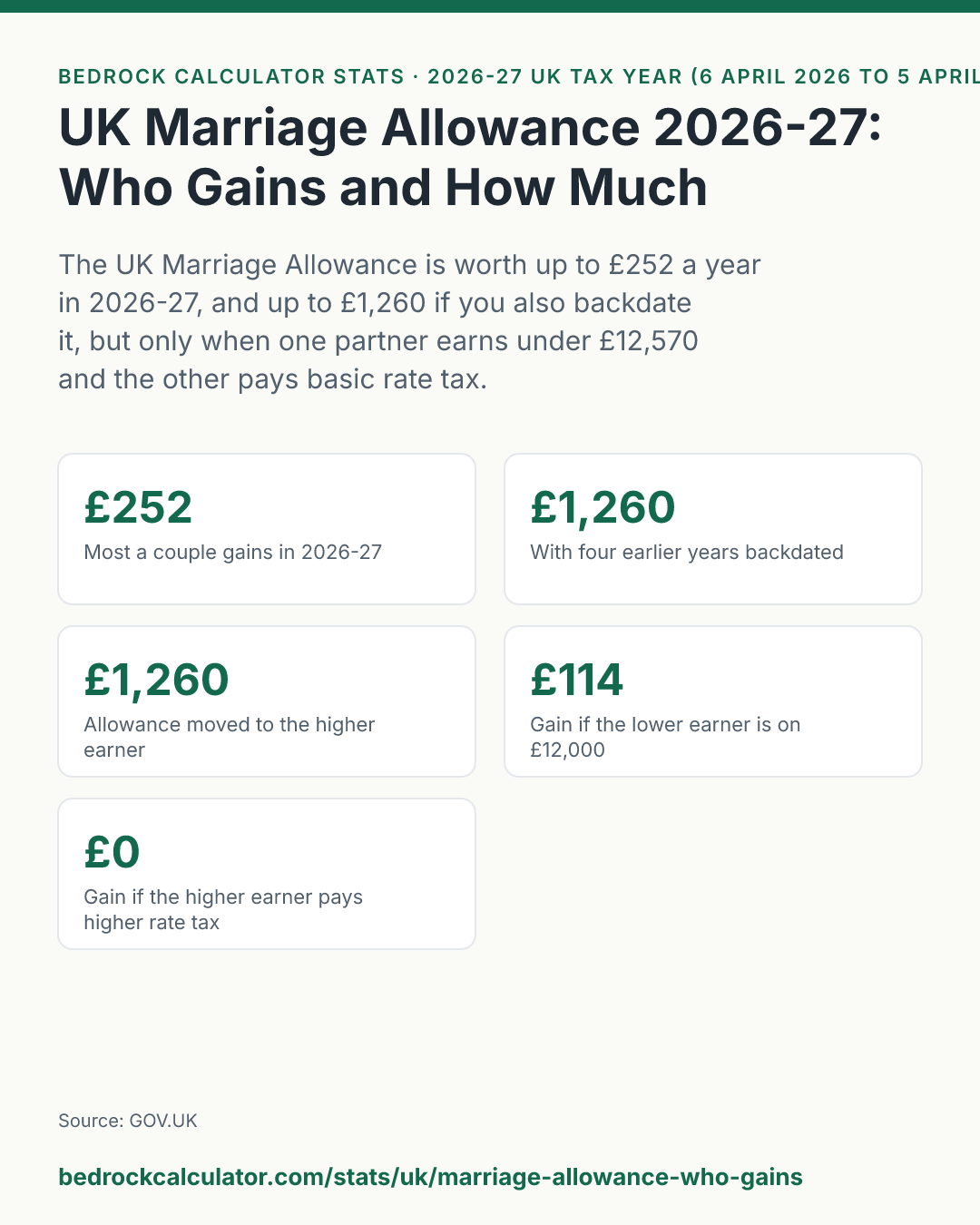
The UK Marriage Allowance lets a married couple or civil partners move £1,260 of Personal Allowance from the lower earner to the higher earner. In the 2026-27 tax year it's worth up to £252 a year to the couple, and up to £1,260 if you qualify now and backdate the claim four years.
It only works for a particular kind of couple. One partner has to earn less than the £12,570 Personal Allowance, and the other has to be a basic rate taxpayer. The closer the lower earner gets to £12,570, the less the allowance is worth, and it's worth nothing at all if the higher earner pays higher rate tax.
How we worked out these numbers
We ran the UK Marriage Allowance calculator on this site across a range of incomes for each partner. For every pair it does three things:
- It checks eligibility: the lower earner must be on no more than £12,570, and the higher earner must be a taxpayer but not above the basic rate limit, which is £50,270 in England, Wales and Northern Ireland and £43,662 in Scotland.
- It works out the higher earner's saving, which is 20% of the £1,260 moved across, so up to £252.
- It works out any extra tax the lower earner now pays, because their own allowance has dropped by £1,260, and takes that off the saving.
The backdated figure assumes you qualified in the same way in each of the four earlier years and multiplies the 2026-27 gain by five. Your real backdated figure depends on what each of you earned in those years.
Who gains the full amount
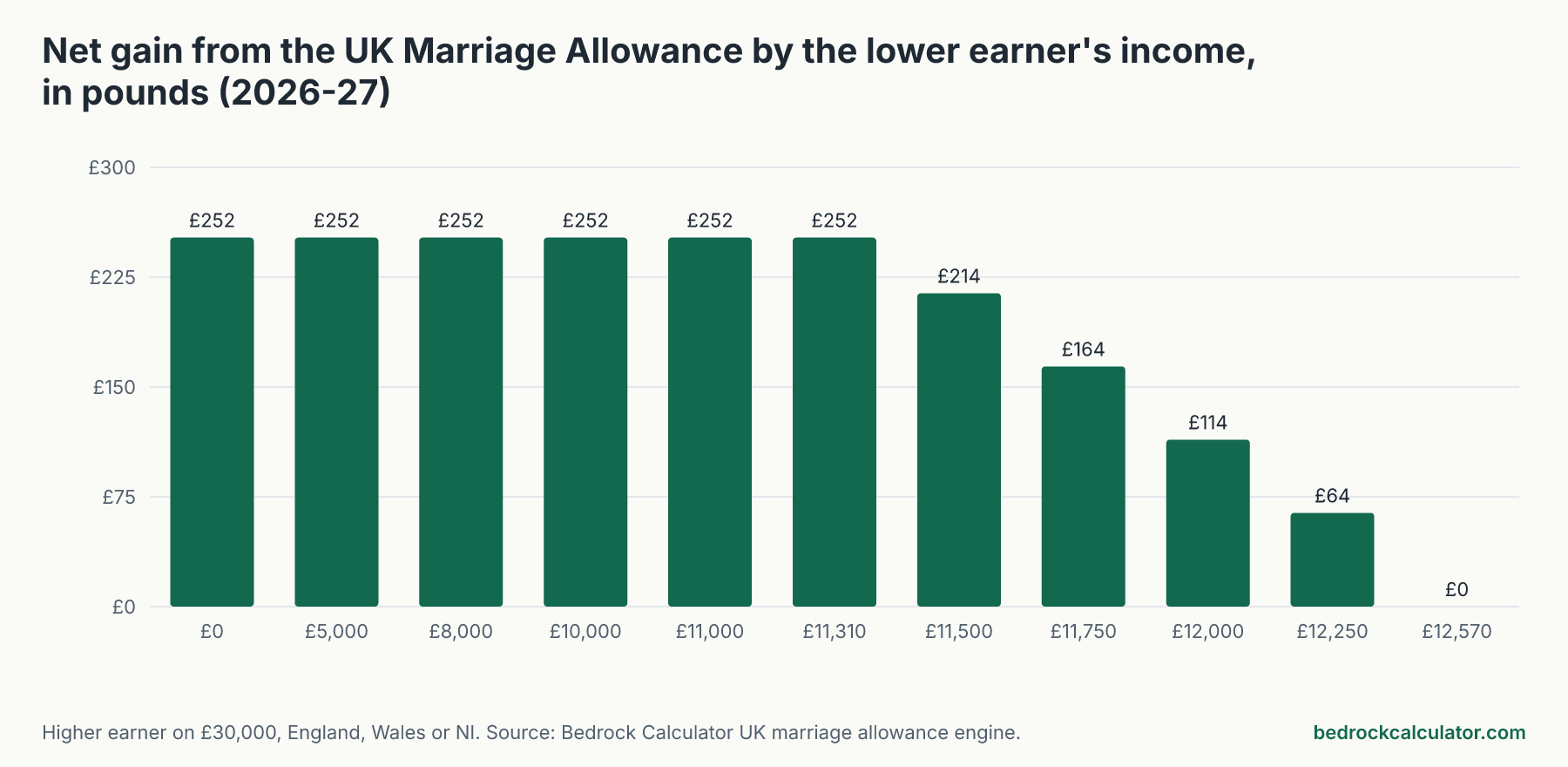
If the lower earner's income is £11,310 or less, giving up £1,260 of allowance costs them nothing, because they still have more allowance than income. The higher earner then saves the full £252. That covers a lot of couples where one partner doesn't work, works part-time or is on a low wage.
For a couple where one partner earns £8,000 and the other £30,000, the gain is £252 a year. In practice HMRC changes the higher earner's tax code, so it shows up as about £21.00 a month more in their pay rather than as a payment.
When the lower earner earns too much for it to be worth it
Things change once the lower earner's income goes above £11,310. Their allowance after the transfer is now less than their income, so they start paying tax on the difference. That tax comes straight off what the couple gains.
UK Marriage Allowance value by the lower earner's income, 2026-27
Download CSVHigher earner on £30,000, a basic rate taxpayer in England, Wales or Northern Ireland. Pounds a year.
| £0 | £252 | £0 | £252 | £1,260 |
| £5,000 | £252 | £0 | £252 | £1,260 |
| £8,000 | £252 | £0 | £252 | £1,260 |
| £10,000 | £252 | £0 | £252 | £1,260 |
| £11,000 | £252 | £0 | £252 | £1,260 |
| £11,310 | £252 | £0 | £252 | £1,260 |
| £11,500 | £252 | £38 | £214 | £1,070 |
| £11,750 | £252 | £88 | £164 | £820 |
| £12,000 | £252 | £138 | £114 | £570 |
| £12,250 | £252 | £188 | £64 | £320 |
| £12,570 | £252 | £252 | £0 | £0 |
At £11,500 the couple still gains £214. At £12,000 the lower earner pays £138 of new tax and the couple gains £114. At £12,250 the gain falls to £64. At £12,570 the lower earner's new tax of £252 cancels the saving exactly, so the gain is £0. You can still claim at that point, but there's no reason to. And once the lower earner goes above £12,570, they're a taxpayer in their own right and can't transfer at all.
When the higher earner is the problem
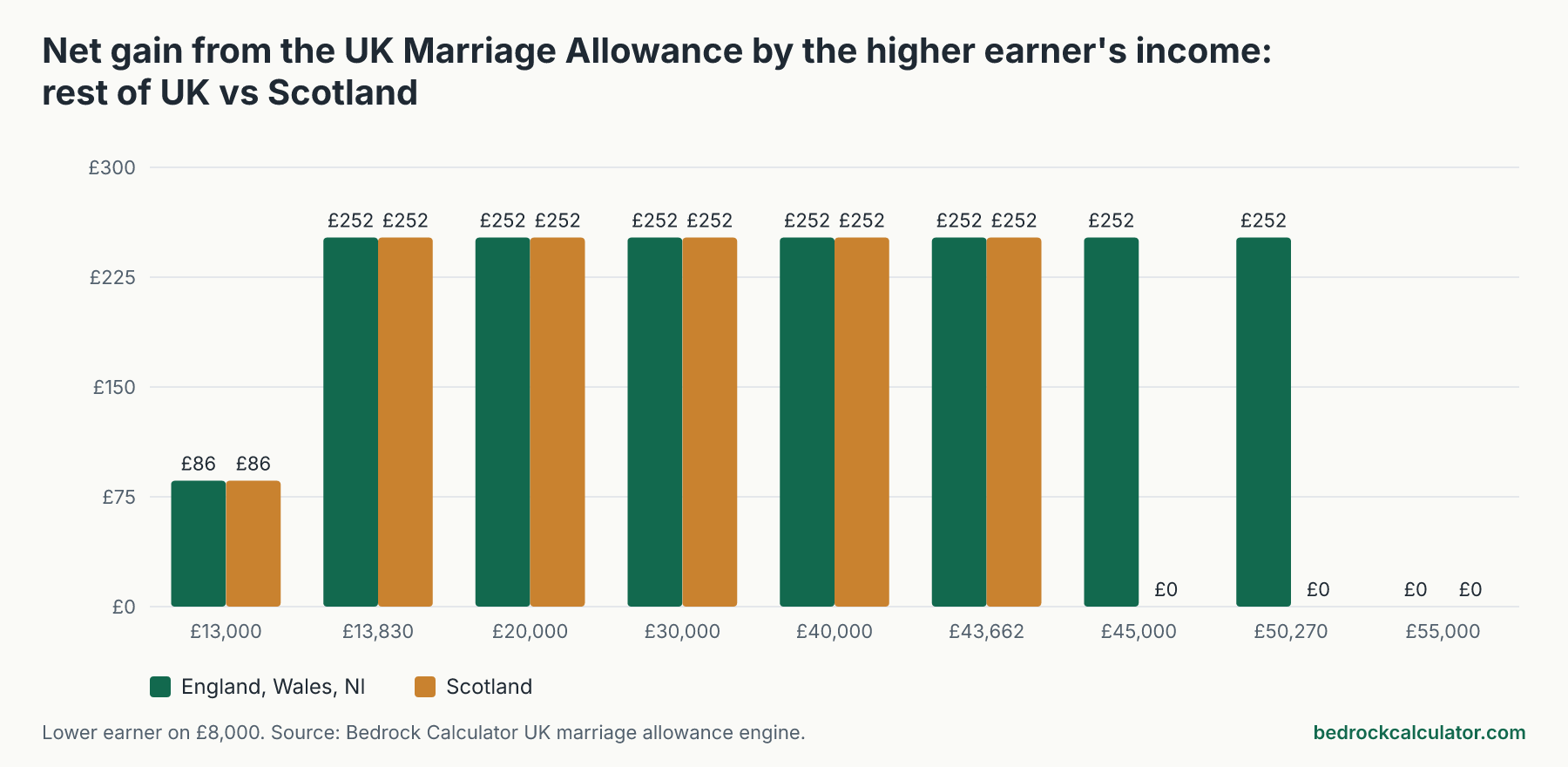
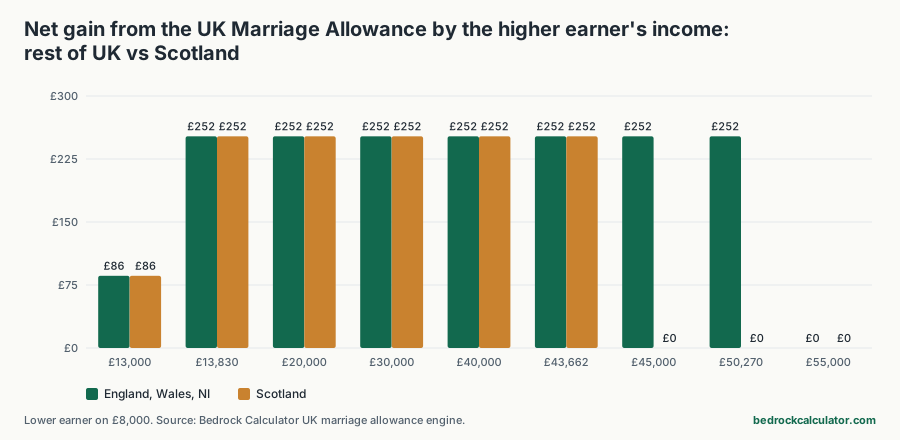
The higher earner needs enough taxable income to use the extra allowance. Someone on £13,000 has only a little income above the Personal Allowance, so the couple gains £86. From about £13,830 they can use the whole transfer and the gain is £252.
At the top end, the higher earner must not pay higher rate tax. In England, Wales and Northern Ireland that means income up to £50,270, where the gain is still £252. One pound more and the claim isn't allowed, so on £55,000 the gain is £0.
Marriage Allowance in Scotland
Scotland's basic rate limit for this purpose is lower. A Scottish higher earner can claim while paying the starter, basic or intermediate rate, which runs up to £43,662. Above that they're a higher rate taxpayer. So a Scottish couple with one partner on £45,000 gets £0, while the same couple elsewhere in the UK gets £252.
UK Marriage Allowance value by the higher earner's income: rest of UK vs Scotland, 2026-27
Download CSVLower earner on £8,000. A gain of £0 means the claim is not allowed or there is no tax to reduce. Pounds a year.
| £13,000 | £86 | £86 |
| £13,830 | £252 | £252 |
| £20,000 | £252 | £252 |
| £30,000 | £252 | £252 |
| £40,000 | £252 | £252 |
| £43,662 | £252 | £252 |
| £45,000 | £252 | £0 |
| £50,270 | £252 | £0 |
| £55,000 | £0 | £0 |
The calculator values the saving at 20% of the transfer for everyone, including Scottish intermediate rate taxpayers, and GOV.UK gives the same £252 maximum without a separate Scottish figure.
Backdating your claim
If you've qualified for a while but never claimed, you can backdate the allowance by up to four tax years. For a couple who qualified for the full amount in every year, the 2026-27 year plus four earlier years comes to £1,260. For a couple where the lower earner is on £12,000 it's £570.
What these figures leave out
The calculator keeps to the core rule. It doesn't model:
- Married Couple's Allowance, a separate and bigger relief for couples where one partner was born before 6 April 1935. You can't claim both.
- Savings and dividend income, which can decide whether the higher earner is really a basic rate taxpayer.
- Changes during the year, such as marrying, separating or a partner dying, which change how the claim works.
- Differences between earlier years. The backdated figure assumes the same incomes in each year.
- How you claim. The lower earner applies, usually online, and the transfer carries on each year until it's cancelled.
Run your own numbers
Enter both incomes in the UK Marriage Allowance calculator to see whether you qualify and what you'd gain. For the full picture of what each of you pays, the UK income tax calculator and the UK take-home pay calculator show tax band by band.