How much Child Benefit do you repay between £60,000 and £80,000?
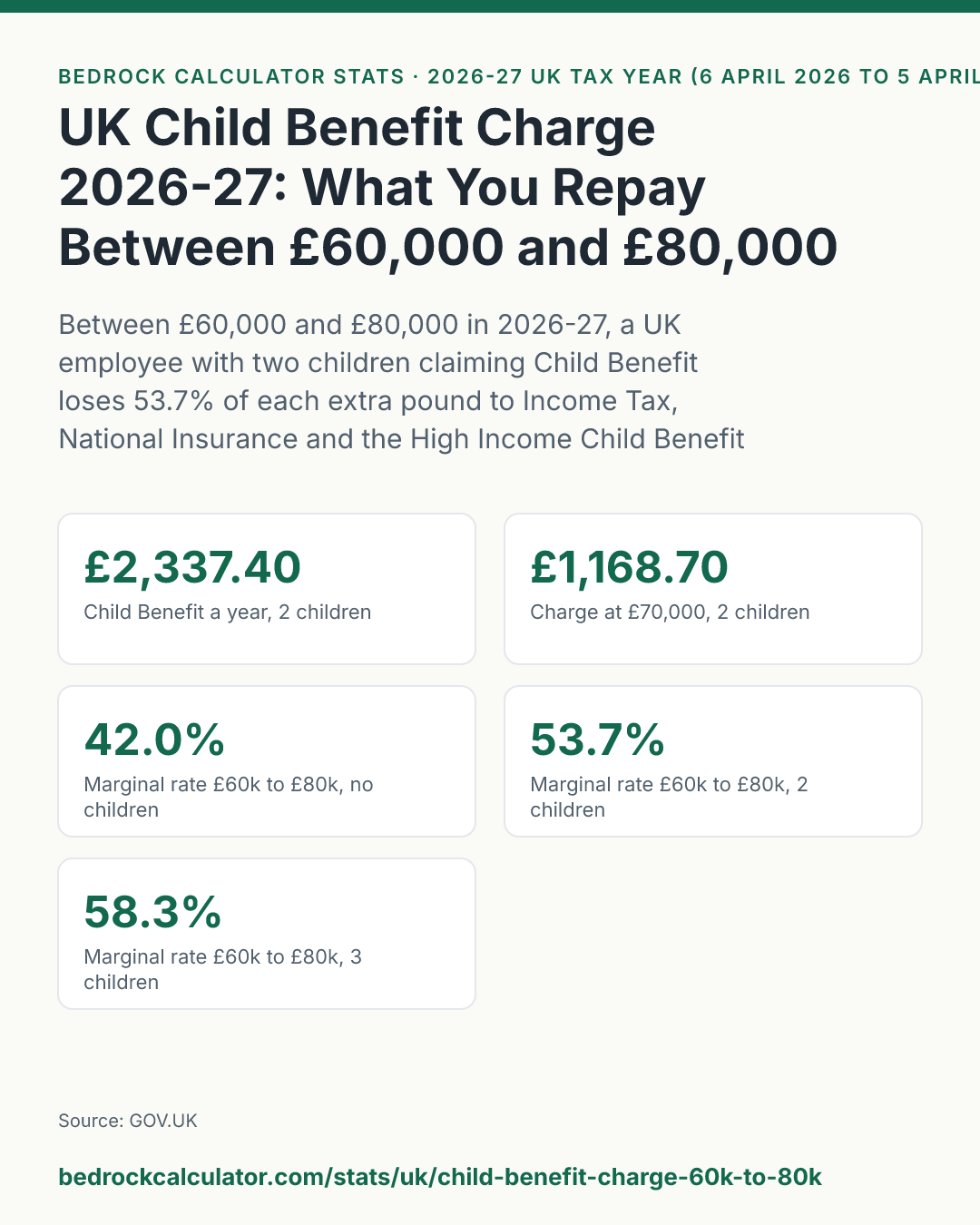
If the higher earner in a UK household has adjusted net income between £60,000 and £80,000, part of the family's Child Benefit has to be paid back through the High Income Child Benefit Charge. In the 2026-27 tax year, at £70,000, half of it goes back: £1,168.70 for a family with two children.
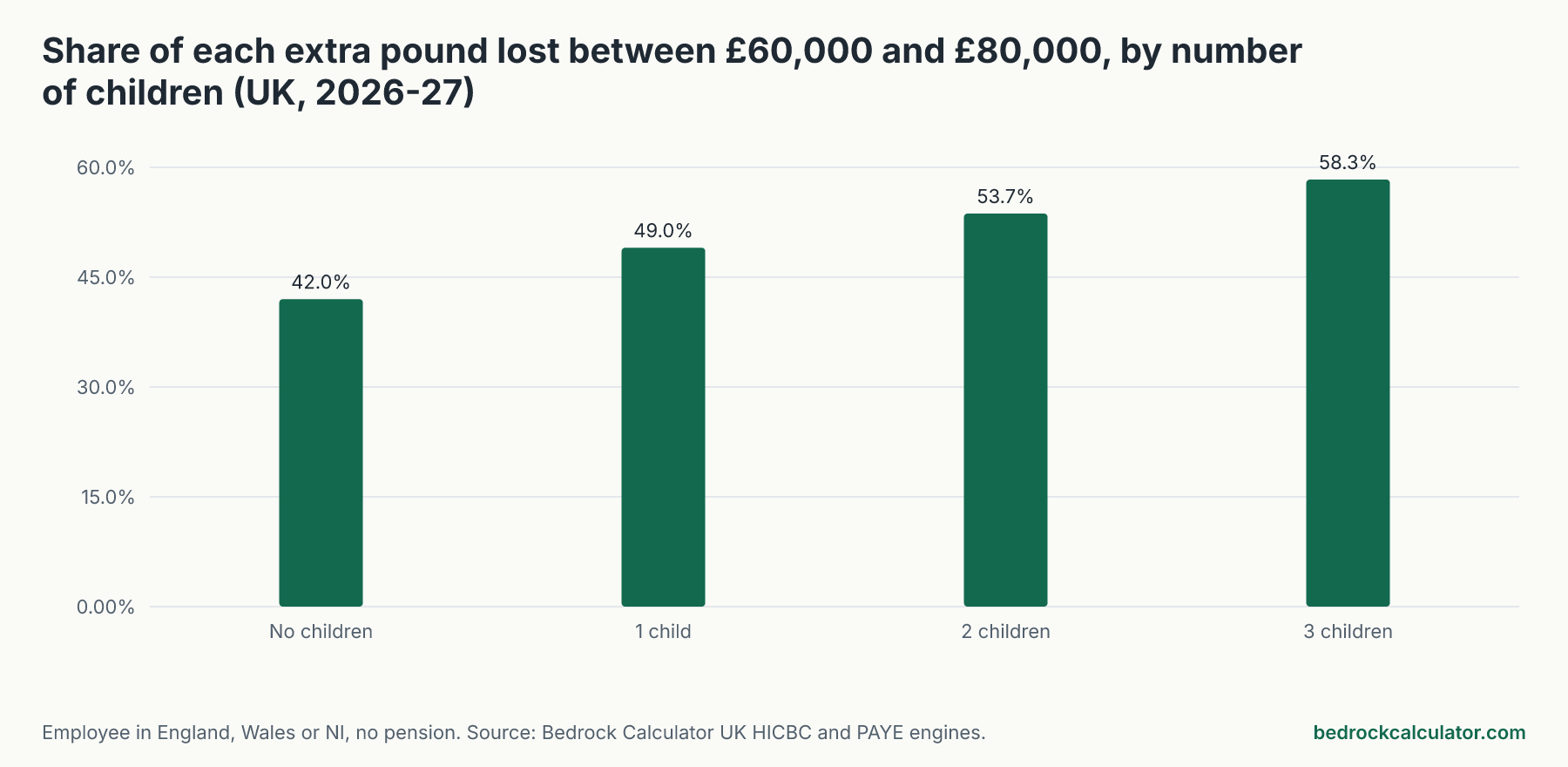
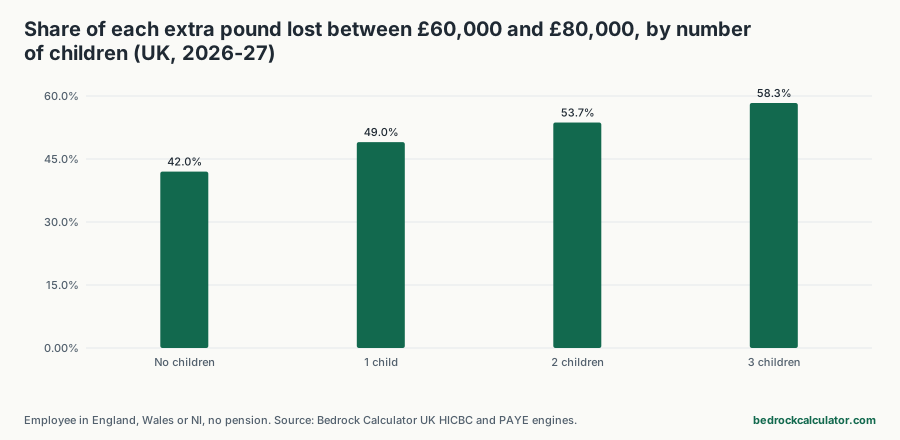
Stacked on top of Income Tax and National Insurance, that makes the band from £60,000 to £80,000 unusually expensive. An employee with two children loses 53.7% of each extra pound across it. Without children the same band costs 42.0%.
How we worked out these numbers
We ran the Child Benefit charge calculator on this site at every £2,500 of adjusted net income from £60,000 to £80,000, for families claiming for one, two and three children. Child Benefit is counted at the 2026-27 weekly rates for a full year: £27.05 a week for the eldest child and £44.95 a week for two.
The charge is based on the adjusted net income of whichever partner earns more, not on household income. A couple each earning £50,000 pays no charge at all, while a single earner on £80,000 repays everything.
For the marginal rate, we added the Income Tax and employee National Insurance that the UK take-home pay calculator charges on a salary rising from £60,000 to £80,000. That's £8,400 of tax and NI on the £20,000 slice. It assumes the higher earner is an employee in England, Wales or Northern Ireland whose adjusted net income is simply their salary, with no pension contributions or Gift Aid.
The calculator doesn't work out adjusted net income for you; you enter it. It doesn't model choosing not to receive payments, unusual family set-ups, or how the charge is actually collected through Self Assessment or a tax code change.
The charge at every income from £60,000 to £80,000
Click any column heading to sort. Amounts are in pounds for a full year.
UK High Income Child Benefit Charge 2026-27, £60,000 to £80,000
Download CSVAdjusted net income of the higher earner. Charge in pounds, rounded to the nearest pound. Child Benefit at the 2026-27 weekly rates for a full year.
| £60,000 | 0% | £0 | £0 | £0 | £2,337 |
| £62,500 | 12% | £169 | £280 | £392 | £2,057 |
| £65,000 | 25% | £352 | £584 | £817 | £1,753 |
| £67,500 | 37% | £520 | £865 | £1,209 | £1,473 |
| £70,000 | 50% | £703 | £1,169 | £1,634 | £1,169 |
| £72,500 | 62% | £872 | £1,449 | £2,026 | £888 |
| £75,000 | 75% | £1,055 | £1,753 | £2,451 | £584 |
| £77,500 | 87% | £1,224 | £2,034 | £2,843 | £304 |
| £80,000 | 100% | £1,407 | £2,337 | £3,268 | £0 |
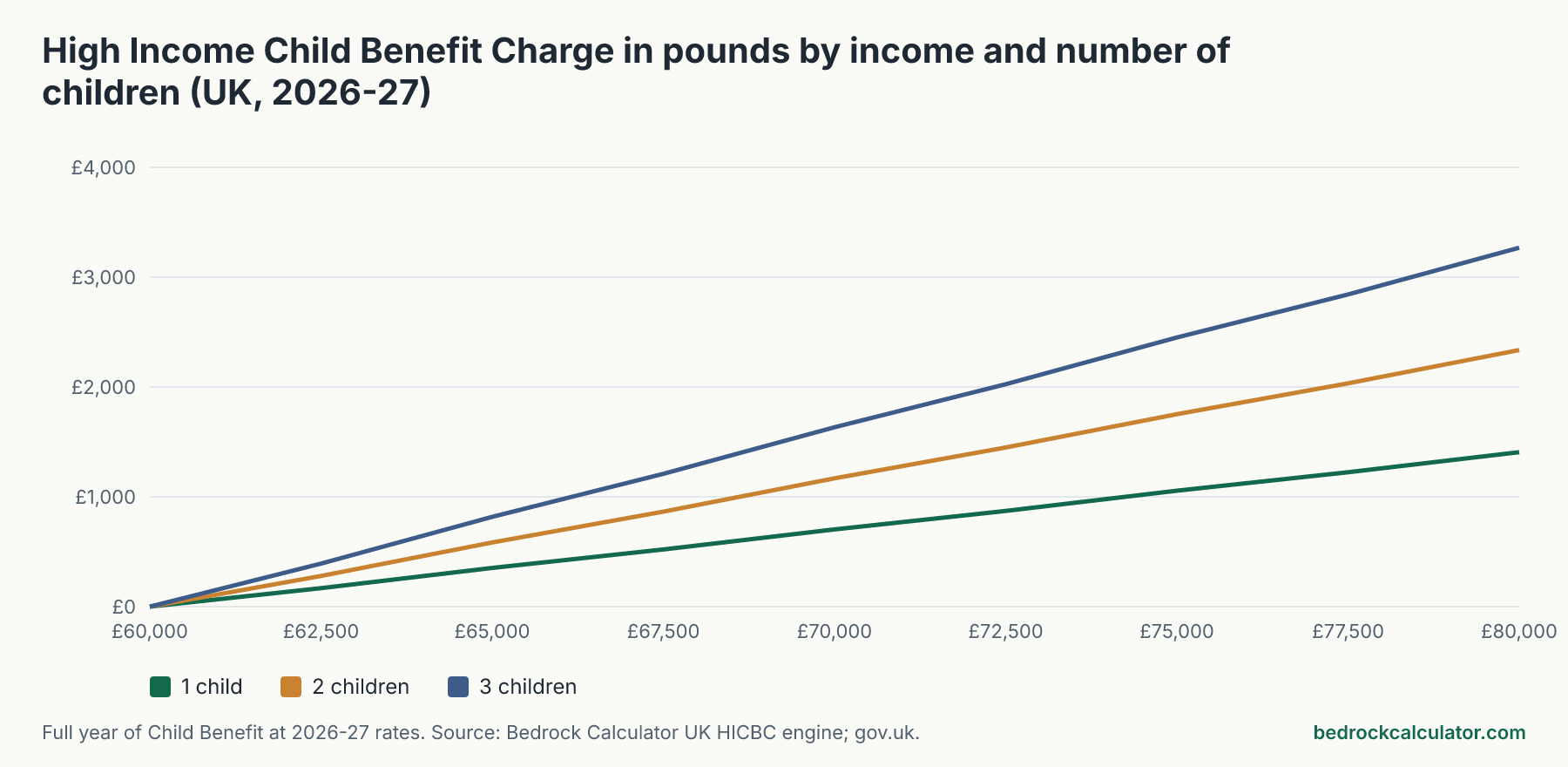
The charge rises in a straight line. For each complete £200 above £60,000, one percent of the year's Child Benefit is clawed back. At £65,000 a two-child family repays £584.35; at £70,000, £1,168.70; at £75,000, £1,753.05; and at £80,000 the full £2,337.40.
The "complete £200" rule means small amounts over the line don't count. At £60,199 the charge is still £0.00. At £61,000 it's 5% of the benefit, or £116.87 for two children.
What is the effective tax rate between £60k and £80k with children?
An employee in the higher rate band already pays Income Tax and the lower rate of NI on each extra pound, which together come to 42.0%. The Child Benefit charge sits on top of that.
With one child the combined rate across the band is 49.0%. With two it's 53.7%, and with three it's 58.3%. The more children, the more benefit there is to claw back over the same £20,000, so the steeper the rate.
In pounds, a two-child family whose higher earner gets a raise from £60,000 to £80,000 keeps £9,263 of the £20,000. The rest goes in tax, NI and the charge.
This is a separate effect from the one that starts at £100,000, where the Personal Allowance is withdrawn. Our article on the UK tax trap above £100,000 covers that band.
How much is Child Benefit in 2026-27?
The weekly rate for the eldest or only child is £27.05, which is £1,406.60 over a year. Each extra child adds a lower rate, so two children bring in £2,337.40 a year and three bring in £3,268.20. Those are the amounts that the charge claws back in full at £80,000.
How families bring their income below the line
The charge is worked out on adjusted net income, not salary, which leaves room to act.
Pension contributions. Salary sacrifice cuts gross pay directly. A personal pension contribution reduces adjusted net income by the gross amount. Either one, if it pulls income back towards £60,000, cuts the charge as well as the tax. Our figures on salary sacrifice savings show the tax side, and the charge saving comes on top.
Gift Aid. Donations under Gift Aid also lower adjusted net income.
Who earns what. Because the test looks at the higher earner, income that genuinely belongs to the lower earner, such as savings in their name, doesn't count against the threshold.
Should you still claim?
Yes, in most cases, even above £80,000. Making the claim and opting out of the payments protects National Insurance credits for a parent who's at home with a child under 12, which count towards their State Pension. It also makes sure the child gets a National Insurance number automatically. The calculator doesn't model this choice, but it costs nothing.
Getting your own figure
Enter the number of children and the higher earner's adjusted net income in the Child Benefit charge calculator. To see how a pension contribution would change both your take-home and the charge, try the salary sacrifice calculator first, then put the lower income into the charge calculator.