How much profit does a UK buy-to-let make after tax?
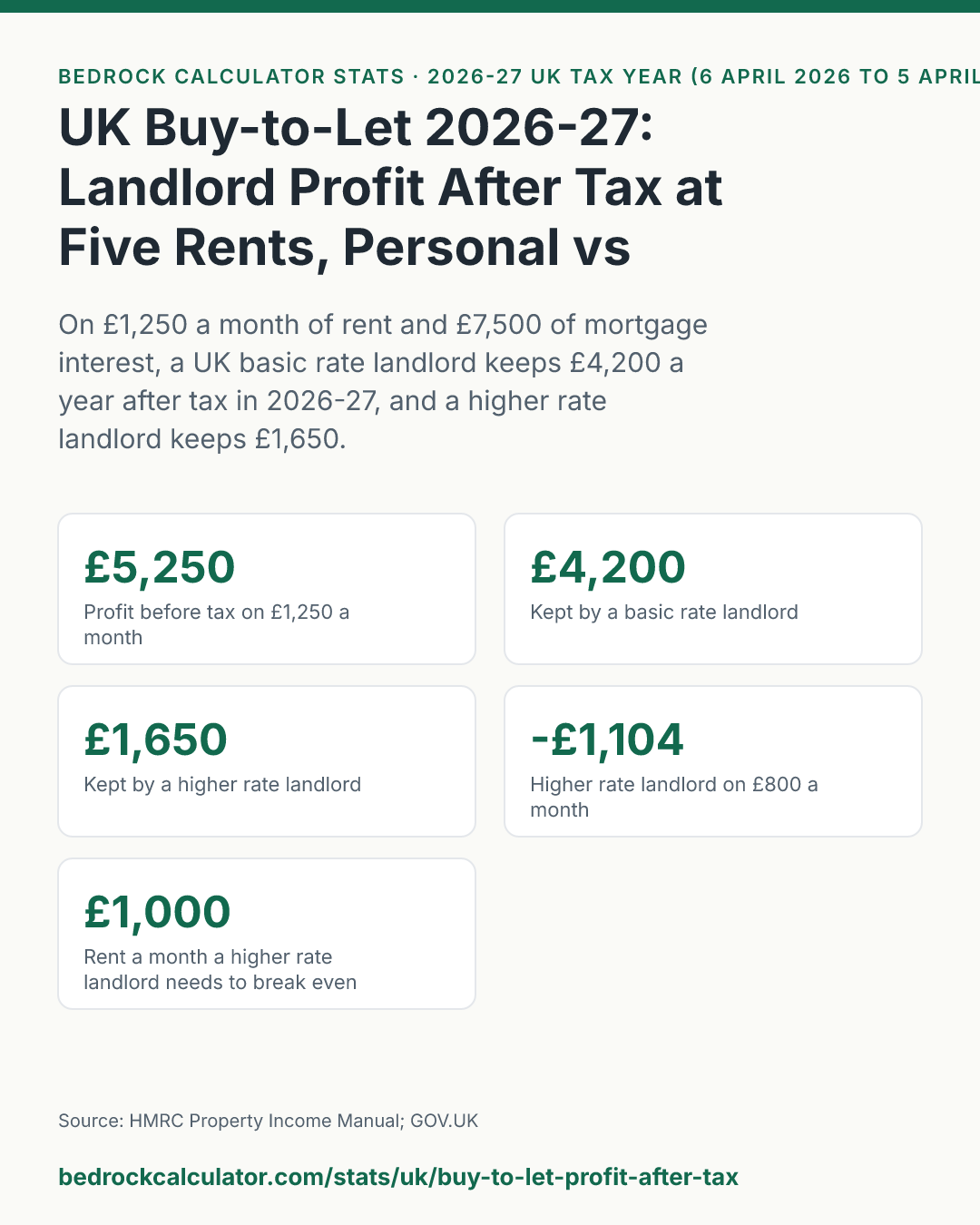
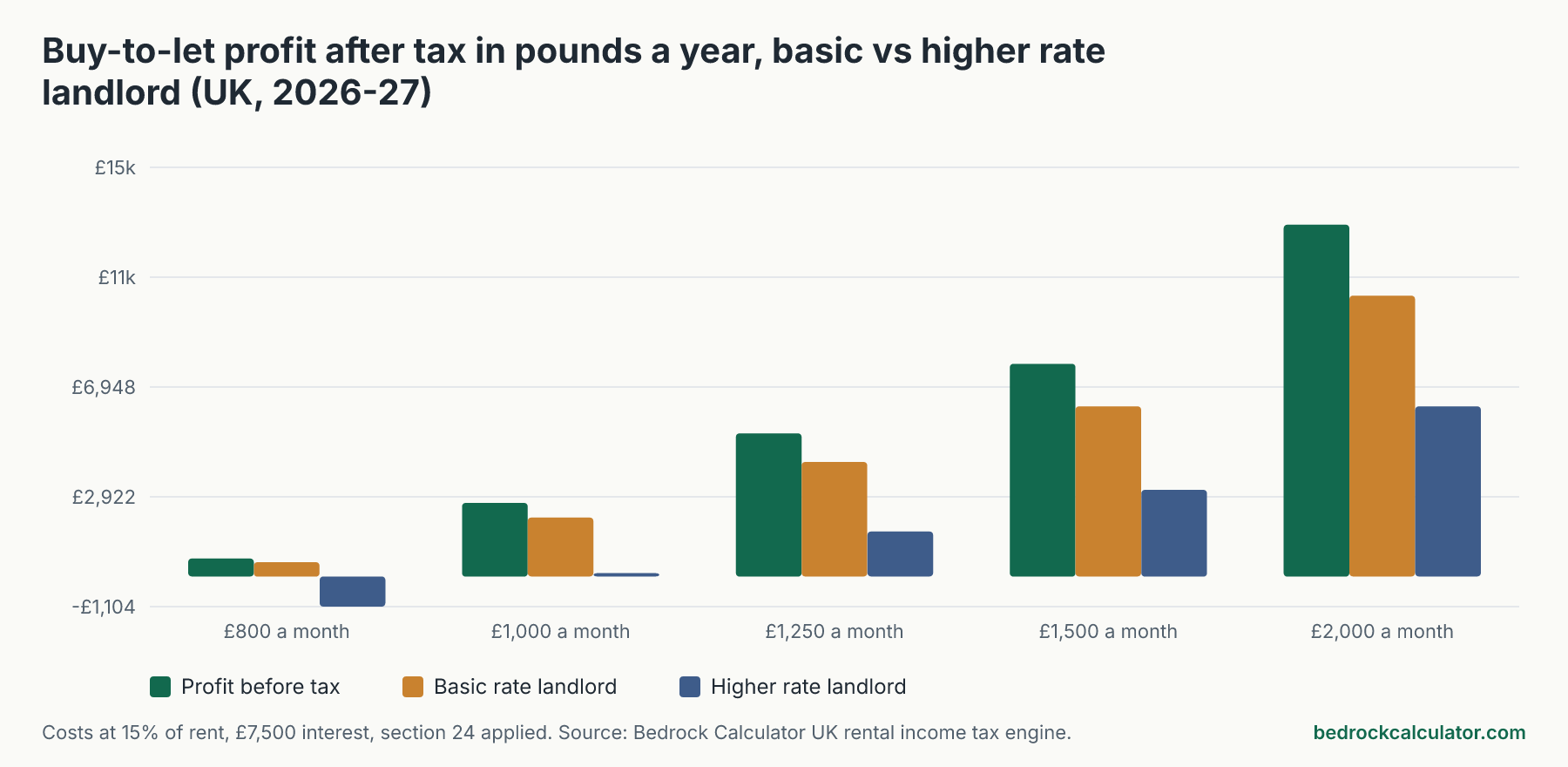
Whether a UK buy-to-let makes money after tax depends heavily on the landlord's other income. On a flat let for £1,250 a month with £7,500 a year of mortgage interest, the cash profit before tax is £5,250. In the 2026-27 tax year a basic rate landlord keeps £4,200 of that. A higher rate landlord keeps £1,650.
At lower rents the gap becomes a loss. On £800 a month a higher rate landlord ends the year -£1,104 after tax, despite a small cash profit, because mortgage interest isn't deducted from rental income.
How we worked out these numbers
We ran the UK rental income tax calculator on this site at five rents, from £800 to £2,000 a month, for two landlords who own the property personally:
- A basic rate landlord with £30,000 of other income, such as a salary
- A higher rate landlord with £60,000 of other income
To keep the comparison clean we chose the same costs for every rent. Running costs, meaning letting agent fees, repairs and insurance, are set at 15% of the rent. Mortgage interest is £7,500 a year, which is what a £150,000 interest-only mortgage at 5% would cost. These are our inputs for the illustration, not averages. Your own costs will differ, and the calculator lets you enter them.
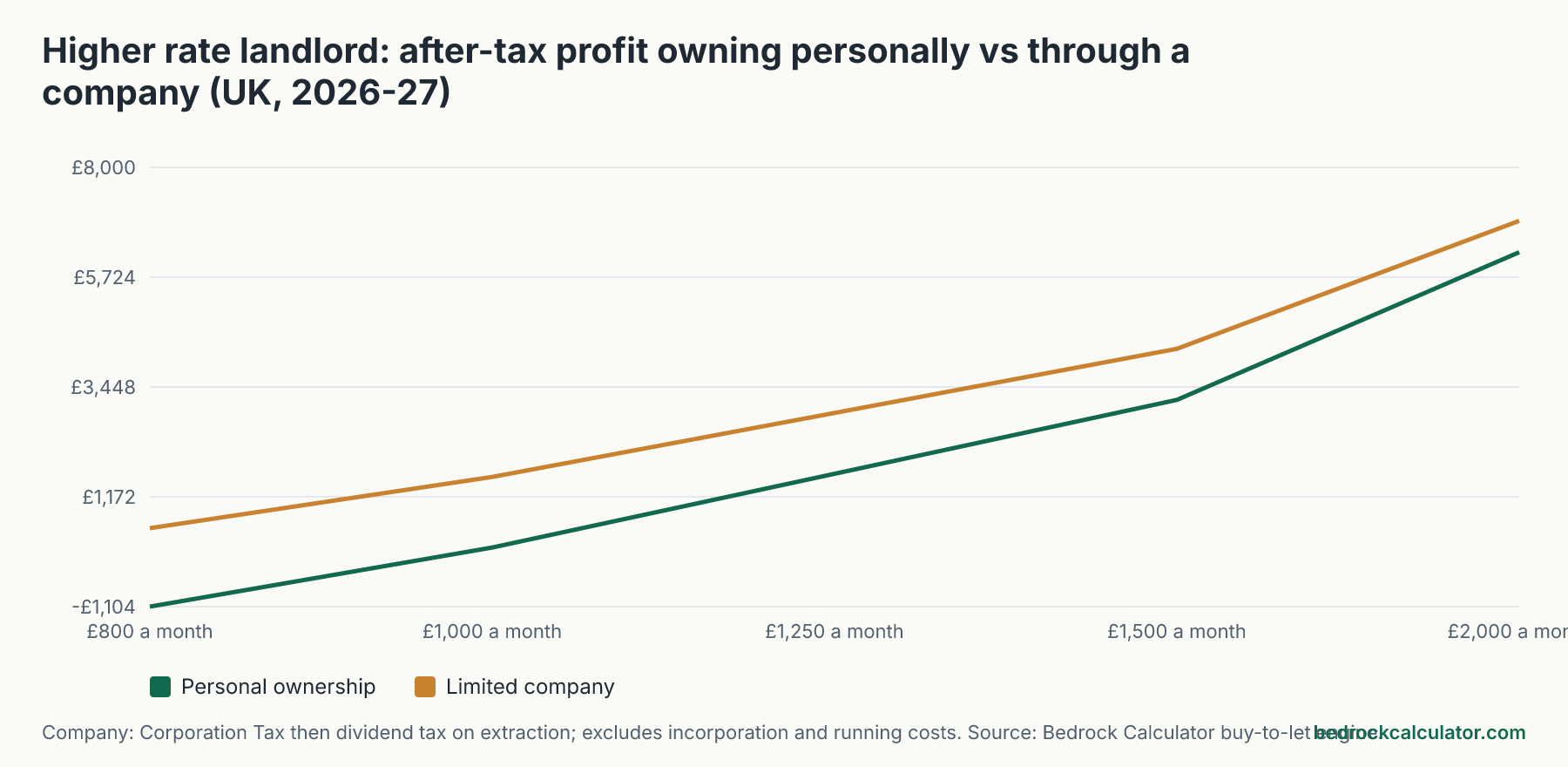
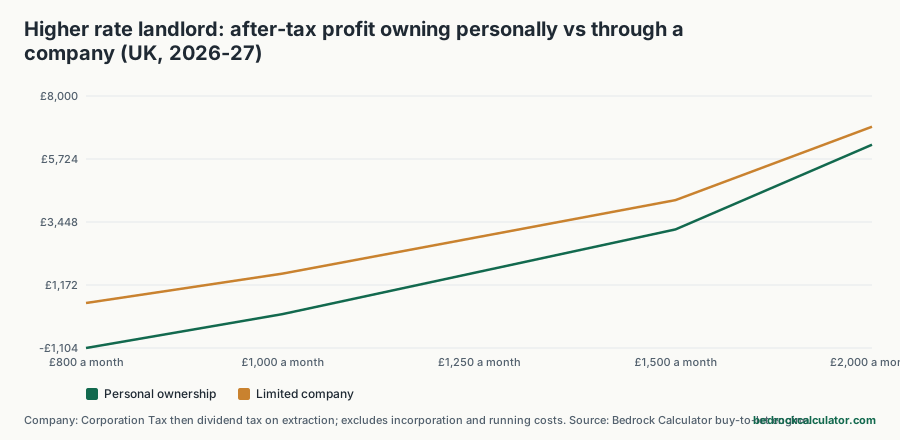
For the company column we ran the buy-to-let tax calculator, which compares the same property held in a limited company that pays Corporation Tax and then pays all its profit out to the higher rate landlord as a dividend.
The calculators use the 2026-27 rates. The higher property income rates announced for later only start on 6 April 2027, so they aren't applied here. What they leave out: the property allowance, Rent a Room relief, capital allowances, jointly owned property, Capital Gains Tax when you sell, and for the company route, higher company mortgage rates, accountancy costs and the tax on moving a property you already own into a company.
Landlord profit after tax at five rents
Click any column heading to sort. All amounts are in pounds a year.
UK buy-to-let profit after tax by monthly rent, 2026-27
Download CSVRunning costs at 15% of rent and £7,500 a year of mortgage interest. Personal ownership, England, Wales and NI rates, section 24 applied. Company column: same property in a limited company, all profit paid out as a dividend to the higher rate landlord. Pounds a year, rounded.
| £800 | £660 | £132 | £528 | £1,764 | -£1,104 | £522 |
| £1,000 | £2,700 | £540 | £2,160 | £2,580 | £120 | £1,584 |
| £1,250 | £5,250 | £1,050 | £4,200 | £3,600 | £1,650 | £2,911 |
| £1,500 | £7,800 | £1,560 | £6,240 | £4,620 | £3,180 | £4,238 |
| £2,000 | £12,900 | £2,606 | £10,294 | £6,660 | £6,240 | £6,892 |
Why higher rate landlords pay so much more
Since section 24 was fully phased in, an individual landlord can't deduct mortgage interest from rental profit. Instead, Income Tax is worked out on the rent minus running costs, and the landlord gets a tax reduction worth the basic rate of the interest.
For a basic rate landlord that works out roughly the same as a full deduction. On £1,250 a month they pay £1,050 of tax, which is 20.0% of the cash profit.
For a higher rate landlord it doesn't. Their profit before interest is taxed at the higher rate, but the interest only earns relief at the basic rate. On the same £1,250 a month they pay £3,600, which is 68.6% of the cash they actually made.
Can a landlord make a loss after tax?
Yes, and our lowest rent shows how. On £800 a month the cash profit is £660. A basic rate landlord pays £132 of tax and keeps £528. A higher rate landlord owes £1,764 on that same property, so they're -£1,104 after tax: they have to find money from elsewhere to pay HMRC.
Using £25 steps, the calculator puts the break-even rent for our higher rate landlord at about £1,000 a month. For the basic rate landlord it's about £750. That gap is the whole story of section 24.
Is buy-to-let better in a limited company?
A company can deduct mortgage interest in full. It pays Corporation Tax on what's left, and the landlord then pays dividend tax when the profit is taken out. For our higher rate landlord, that two-layer route comes out ahead at these rents: on £1,250 a month it leaves £2,911 against £1,650 personally, and on £2,000 a month £6,892 against £6,240.
On paper, then, the company wins. In practice the gap is often eaten up. Company buy-to-let mortgages tend to cost more, there are accounts to file every year, and moving an existing property into a company usually means Capital Gains Tax plus stamp duty with the second-home surcharge. Our stamp duty figures by buyer type show how big that surcharge is on its own.
What £2,000 a month leaves you
At the top of our range, a basic rate landlord keeps £10,294 a year, about £858 a month. A higher rate landlord keeps £6,240, about £520 a month, from a cash profit of £12,900. Part of the basic rate landlord's profit at this rent also spills into the higher rate band, which is why their tax rises faster than the rent.
Getting your own figure
Enter your rent, costs, mortgage interest and other income in the rental income tax calculator to see your own bill. To compare owning personally with a company, use the buy-to-let tax calculator. If you're thinking of buying, the second home stamp duty calculator shows the cost of getting in, and the UK Capital Gains Tax calculator the cost of getting out.