How much stamp duty do UK buyers pay in England in 2026?
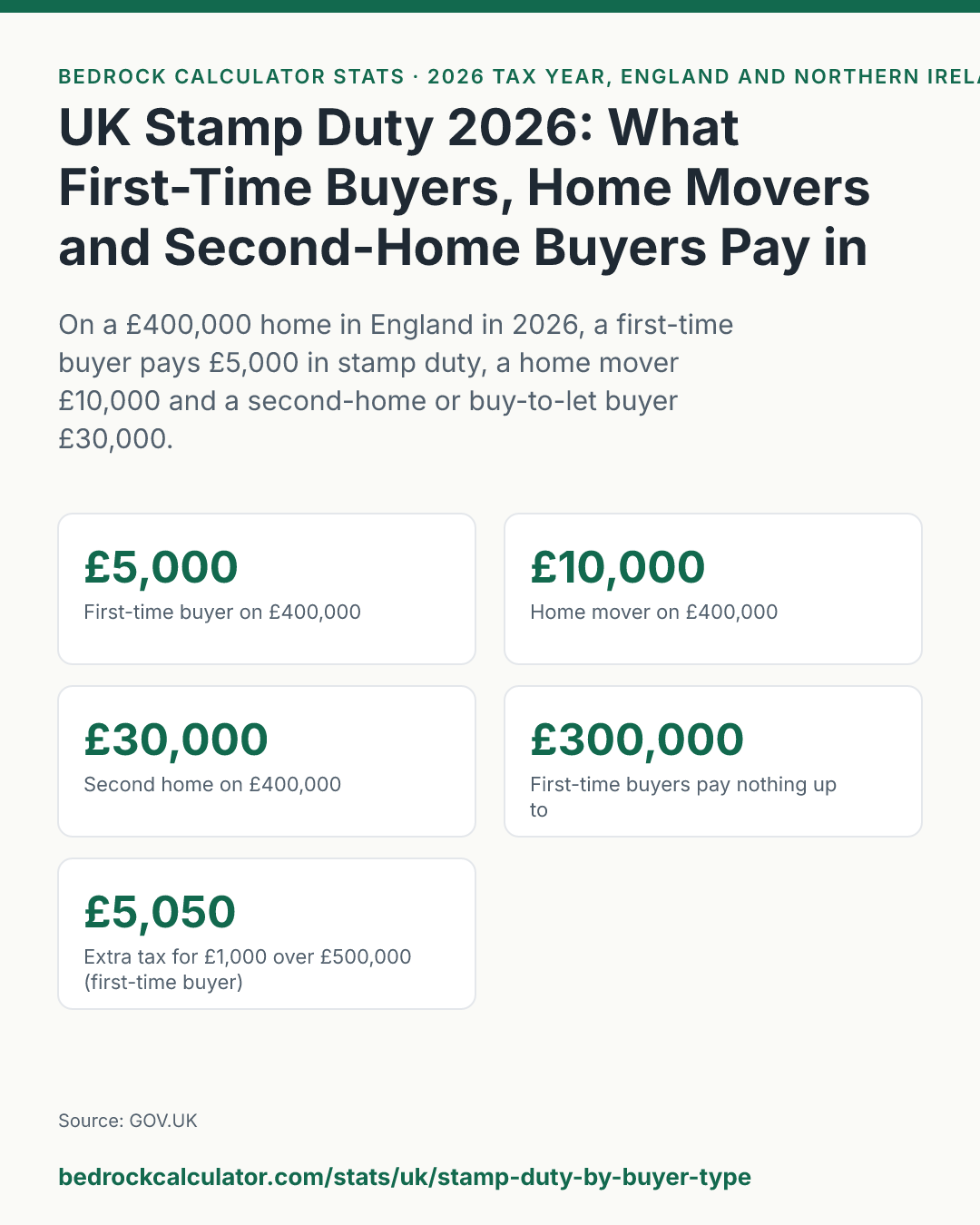
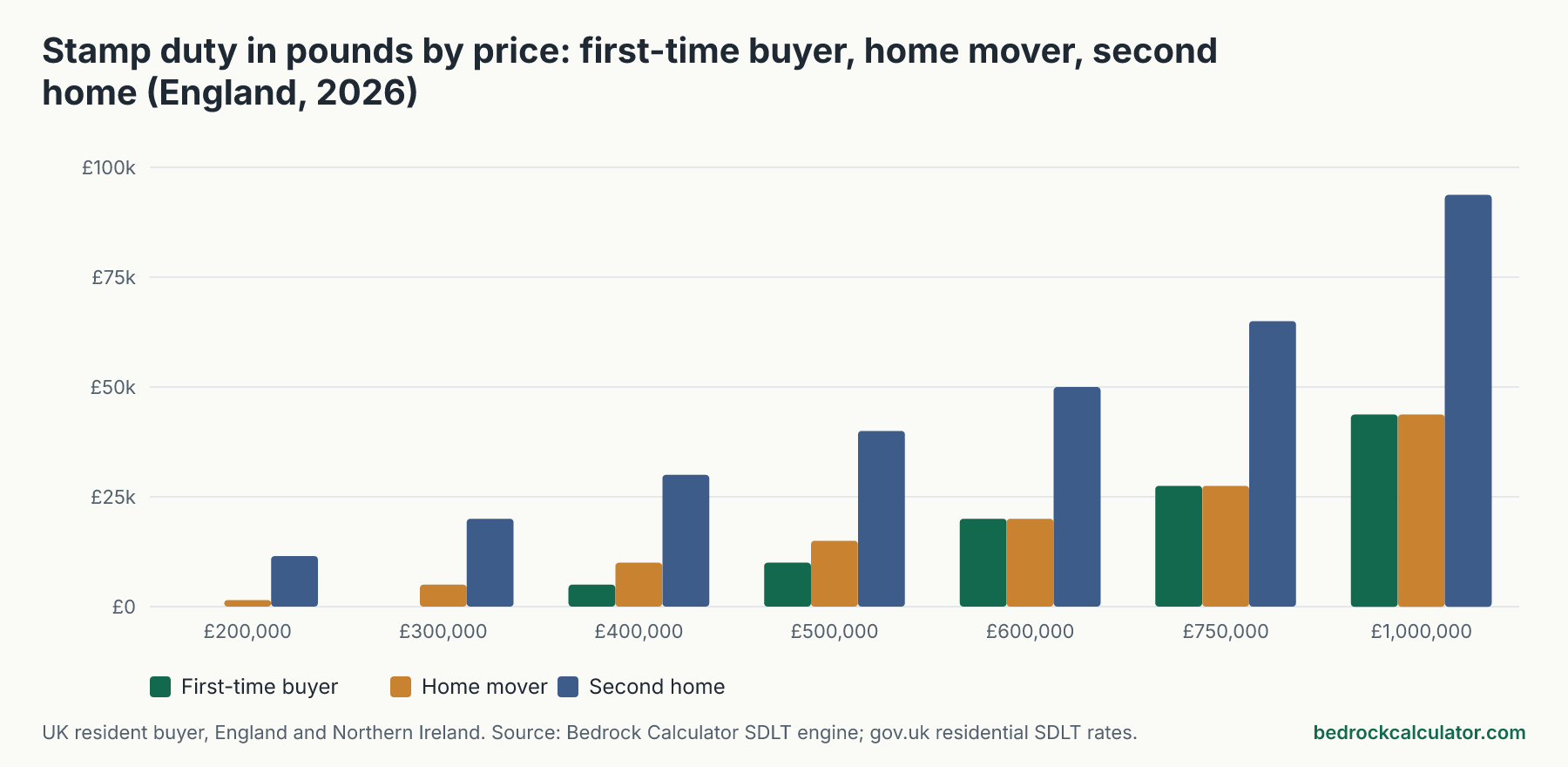
Stamp duty in England depends less on the price than on who you are when you buy. On a £400,000 home in 2026, a first-time buyer pays £5,000, someone moving from one home to another pays £10,000, and someone buying a second home or a buy-to-let pays £30,000.
First-time buyers pay nothing at all up to £300,000. Second-home buyers pay a surcharge of 5% on the whole price, which is why their bill is so much bigger at every level.
How we worked out these numbers
We ran the stamp duty calculator on this site at twelve prices from £150,000 to £1,500,000, once for a first-time buyer and once for a home mover. For the second-home column we used the second home stamp duty calculator, which applies the additional property surcharge and reports how much of the bill it accounts for.
Every run assumes:
- A residential purchase in England or Northern Ireland
- A UK resident buyer, unless we say otherwise
- A single freehold dwelling bought outright, with no linked purchases
- The Stamp Duty Land Tax bands that have applied since 1 April 2025
These are not figures for Scotland or Wales. Scotland has Land and Buildings Transaction Tax and Wales has Land Transaction Tax, with their own bands and their own surcharges, and neither calculator models them.
The calculators also leave out a few things that can change a real bill: the refund of the surcharge if you sell your old main home within three years, shared ownership, the net present value charge on rent for some new leases, mixed-use and non-residential rates, and purchases by companies. If any of those apply to you, a conveyancer should check the figure.
Stamp duty at every price, side by side
Click any column heading to sort. All amounts are in pounds.
UK stamp duty 2026 by price and buyer type (England and Northern Ireland)
Download CSVStamp Duty Land Tax on a residential purchase by a UK resident, in pounds. Second home includes buy-to-let. Not Scotland (LBTT) or Wales (LTT).
| £150,000 | £0 | £500 | £8,000 | 0.33% | 5.33% |
| £200,000 | £0 | £1,500 | £11,500 | 0.75% | 5.75% |
| £250,000 | £0 | £2,500 | £15,000 | 1.00% | 6.00% |
| £300,000 | £0 | £5,000 | £20,000 | 1.67% | 6.67% |
| £350,000 | £2,500 | £7,500 | £25,000 | 2.14% | 7.14% |
| £400,000 | £5,000 | £10,000 | £30,000 | 2.50% | 7.50% |
| £450,000 | £7,500 | £12,500 | £35,000 | 2.78% | 7.78% |
| £500,000 | £10,000 | £15,000 | £40,000 | 3.00% | 8.00% |
| £600,000 | £20,000 | £20,000 | £50,000 | 3.33% | 8.33% |
| £750,000 | £27,500 | £27,500 | £65,000 | 3.67% | 8.67% |
| £1,000,000 | £43,750 | £43,750 | £93,750 | 4.38% | 9.38% |
| £1,500,000 | £93,750 | £93,750 | £168,750 | 6.25% | 11.25% |
First-time buyer stamp duty, and the cliff at £500,000
First-time buyer relief does two things. It removes stamp duty entirely on the first £300,000, and it charges a reduced rate on the slice from there up to £500,000. On a £400,000 flat that saves £5,000 compared with a home mover. On £500,000 the saving is £5,000.
The catch is that the relief has a hard edge. If the price goes over £500,000 by even a pound, you lose the relief on the whole purchase, not just the part above the line. In our numbers, £500,000 costs a first-time buyer £10,000. Add £1,000 to the price and the bill becomes £15,050. That's £5,050 of extra tax for £1,000 more house.
So if you're a first-time buyer close to £500,000, negotiating the price down below the line is worth far more than the headline reduction.
Above that point, first-time buyers and home movers pay exactly the same, which you can see in the table from £600,000 upward.
How much stamp duty does a home mover pay?
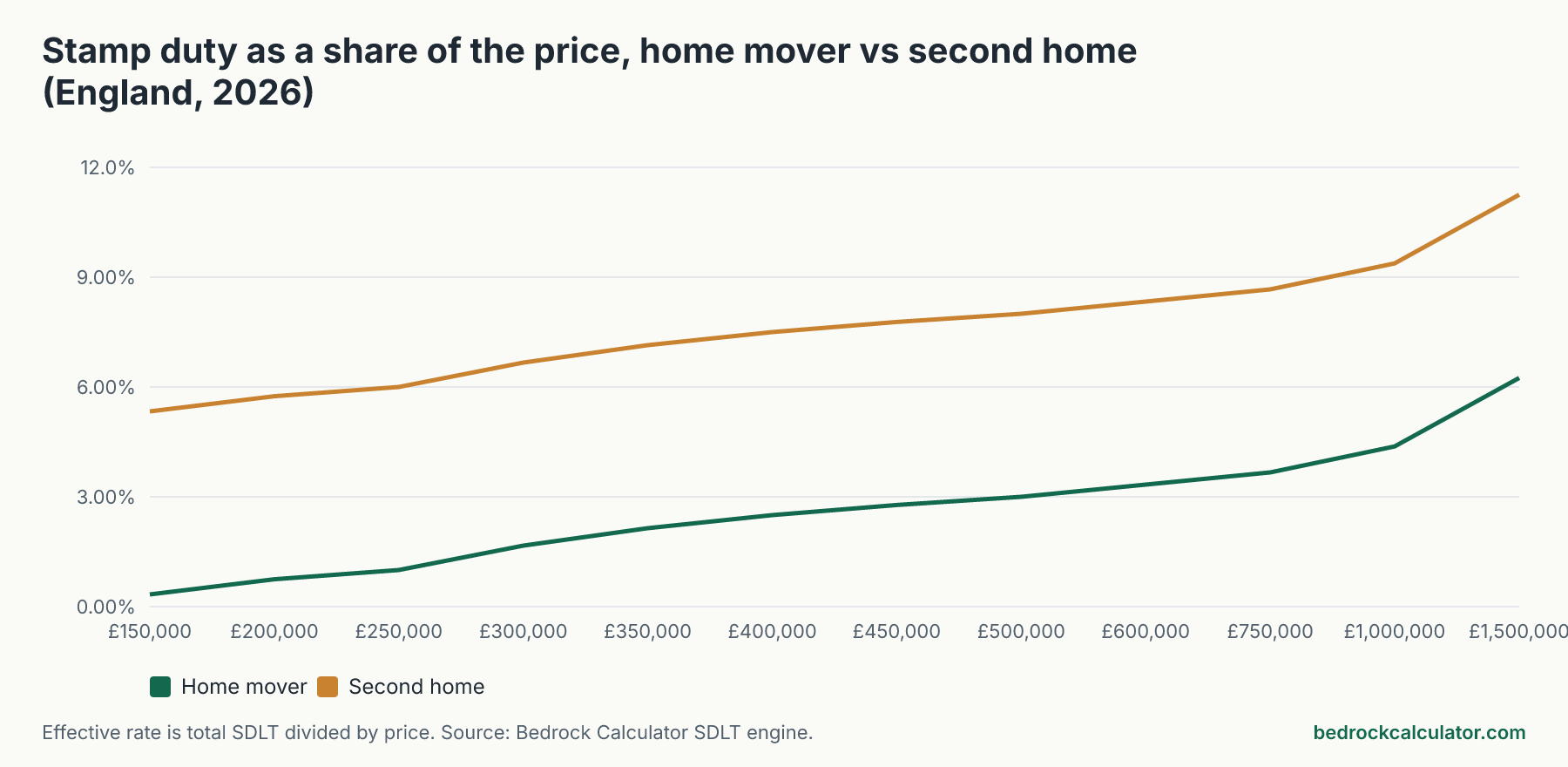
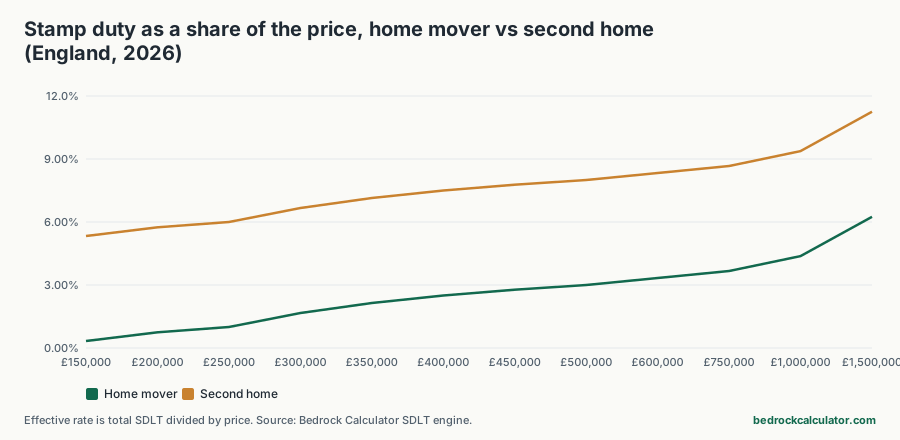
A home mover pays nothing up to £125,000 and then a rising rate on each slice above it. On a £300,000 home that comes to £5,000. On £400,000 it's £10,000, or 2.50% of the price. On £750,000 it's £27,500, and on £1,000,000 it's £43,750.
The share of the price climbs steadily because each extra pound lands in a higher band. It never jumps, the way the first-time buyer bill does at £500,000, because the bands for movers apply to slices of the price rather than the whole thing.
Second home stamp duty in 2026
If you'll own more than one home at the end of the day you complete, the higher rates apply. That covers second homes, holiday homes and buy-to-let flats. The surcharge is 5% of the entire price, stacked on top of the normal bill.
On a £400,000 buy-to-let that's £30,000, which is £20,000 more than a mover would pay for the same property and 7.50% of the price. Even at the bottom of our range the gap is stark: a £150,000 flat costs a mover £500 in stamp duty and a landlord £8,000.
At £1,000,000 a second-home buyer pays £93,750, and the surcharge makes up 53.3% of that bill.
A buyer who isn't a UK resident pays a further charge on top. On a £400,000 second home that takes the bill to £38,000, a combined surcharge of 7% on the full price.
If you're buying to let, stamp duty is only the first cost. Our buy-to-let tax calculator shows what the rent leaves you after Income Tax, and our landlord profit figures work through several rents.
Getting your own figure
Enter your price and buyer type in the stamp duty calculator for a band-by-band breakdown. If you're replacing a home you haven't sold yet, run the second home stamp duty calculator too, since you'll pay the surcharge first and claim it back later. And if you're still working out what you can borrow, the UK mortgage affordability calculator is the place to start.