How much emergency fund do you need?
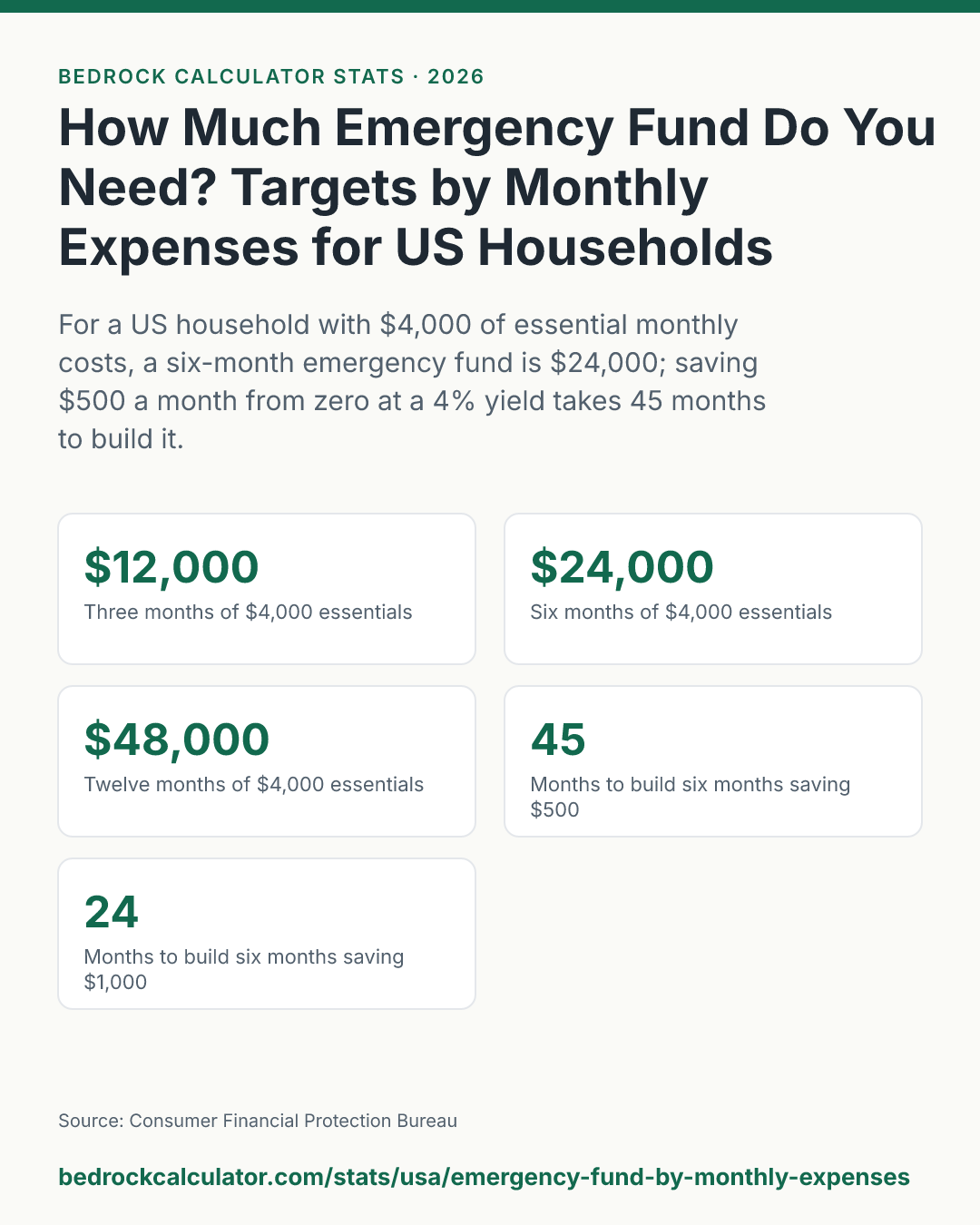
An emergency fund is your essential monthly costs times the number of months you want covered. For a US household with $4,000 a month of must-pay bills, that's $12,000 for three months, $24,000 for six and $48,000 for a full year.
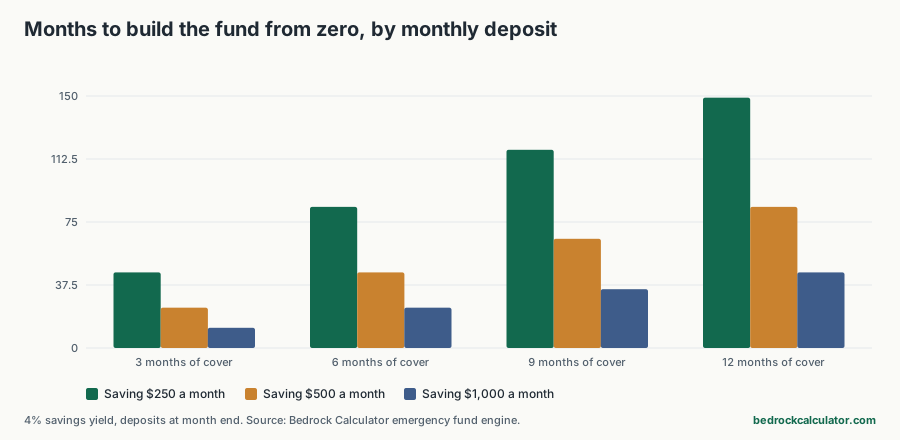
Building it takes longer than most people expect. Saving $500 a month from an empty account at a 4% yield, a six-month fund takes 45 months, a little under four years. At $1,000 a month it takes 24.
How we worked out these numbers
All figures are for US households, from the site's emergency fund calculator. The target is simple multiplication: essential monthly expenses times the months of cover you choose.
For the time to build it, the calculator starts from zero and adds a fixed deposit at the end of each month. The balance earns the savings yield you enter, which the calculator applies as one-twelfth of the yearly rate each month. It then counts the months until the balance reaches the target, rounding up to a whole month.
We used a 4% yield for every run. That's an input, not a quote: savings rates change often, and your bank's will differ. We also show what happens with no interest at all.
The calculator doesn't model taxes on the interest, which is taxable as ordinary income, or inflation, which raises your monthly costs over the years it takes to save. It also assumes your deposits never stop. If you have to dip into the fund while you're building it, it takes longer.
Emergency fund targets by monthly expenses
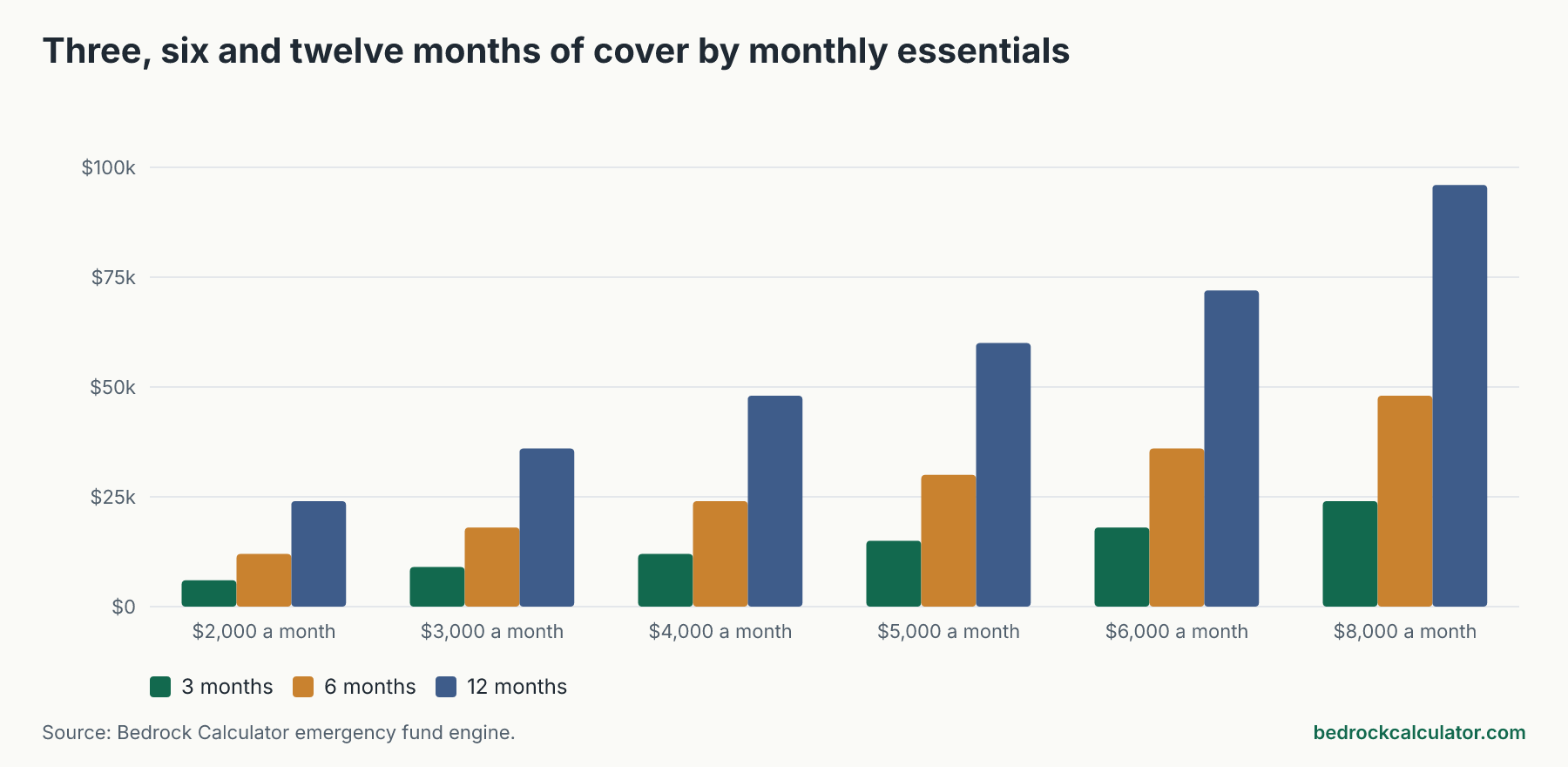
Find your monthly essentials in the left column. Each column to the right is a different amount of cover.
Emergency fund target by monthly essential expenses and months of cover
Download CSVTarget = essential monthly expenses times months of cover. From the emergency fund calculator.
| $2,000 | $6,000 | $12,000 | $18,000 | $24,000 |
| $3,000 | $9,000 | $18,000 | $27,000 | $36,000 |
| $4,000 | $12,000 | $24,000 | $36,000 | $48,000 |
| $5,000 | $15,000 | $30,000 | $45,000 | $60,000 |
| $6,000 | $18,000 | $36,000 | $54,000 | $72,000 |
| $8,000 | $24,000 | $48,000 | $72,000 | $96,000 |
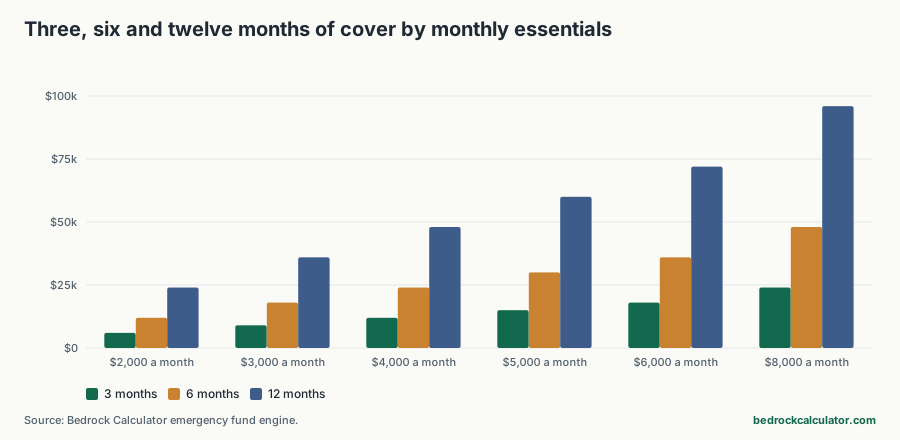
A household spending $2,000 a month on essentials needs $12,000 for six months of cover. At $3,000 it's $18,000, and at $6,000 it's $36,000. A high-cost household at $8,000 a month that wants a full year of cover is looking at $96,000.
Three months or six?
There's no official number. The Consumer Financial Protection Bureau, for one, says the right amount depends on your situation and suggests starting from the unexpected costs you've actually had. Financial planners commonly suggest three to six months of essentials, and more in some situations:
- Three months can be enough for a two-income household where both jobs are stable and either income alone could cover the basics.
- Six months is the more common target for single-income households or anyone with dependents.
- Nine to twelve months makes sense if you're self-employed, work on commission, or are in an industry where job searches take a long time.
The calculator lets you pick any of these, so it's worth running a couple.
How long it takes to build an emergency fund
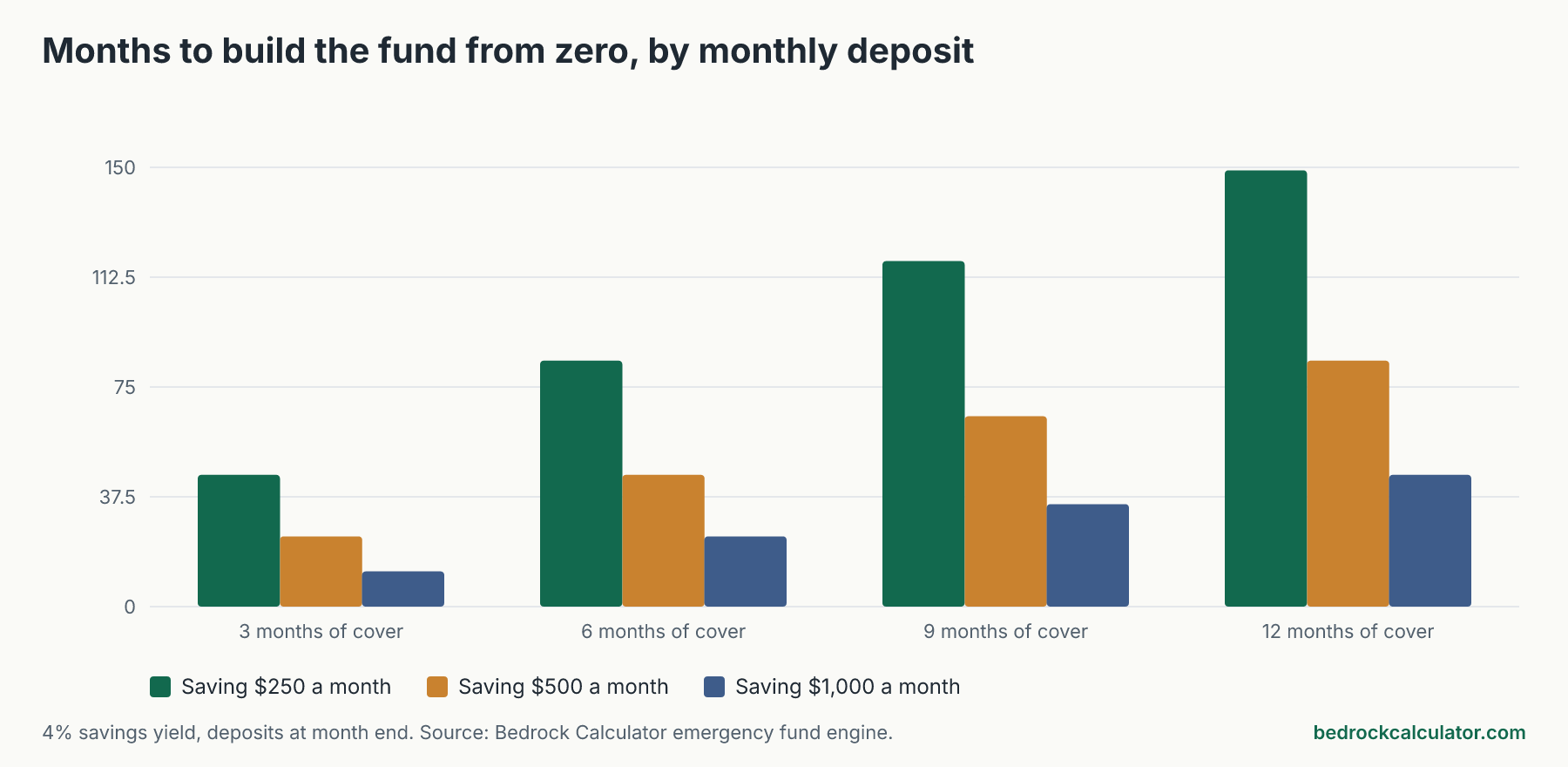
The table below uses $4,000 of monthly essentials. Each cell is the number of months to reach the target from nothing.
Months to build the fund from zero ($4,000 of monthly essentials, 4% yield)
Download CSVMonthly deposits at month end, 4% savings yield applied monthly, starting from an empty account.
| 12 months | $48,000 | 149 | 84 | 45 |
| 3 months | $12,000 | 45 | 24 | 12 |
| 6 months | $24,000 | 84 | 45 | 24 |
| 9 months | $36,000 | 118 | 65 | 35 |
Saving $250 a month, even three months of cover takes years, and six months takes 84 months, or about 7 years. At $500 a month, three months of cover takes 24 months and twelve months takes 84. Doubling the deposit roughly halves the time.
That's why a lot of people build in stages. A first goal of one month of expenses, then three, then six, gives you a cushion sooner and keeps the goal from feeling out of reach. Putting a tax refund or bonus straight into the fund can cut months off the timeline.
Does the interest rate matter?
Less than you might think, at least while you're building the fund. Saving $500 a month toward a $24,000 target takes 45 months at 4% and 48 months with no interest. The deposits do almost all the work.
Where the yield matters is once the fund is full. A large balance sitting in a checking account that pays nothing loses buying power to inflation every year. A high-yield savings account or money market fund keeps it closer to even, while still letting you get the money out quickly.
What counts as an essential expense?
Only the costs you'd still have to pay if your paycheck stopped tomorrow:
- Rent or mortgage, property tax and home insurance
- Utilities, phone and internet
- Groceries, not restaurants
- Health, auto and other insurance premiums
- Transportation you need to get to work or find a new job
- Minimum payments on debts
Leave out spending you could pause, such as eating out, travel, subscriptions and new retirement contributions. Counting only essentials keeps the target realistic.
Getting your own number
Open the emergency fund calculator and enter your own monthly essentials, what you have saved already and what you can put away each month. If you're not sure what you can spare, the paycheck calculator shows your real take-home pay after tax. And once the fund is in place, the compound interest calculator and retirement calculator can help you plan where the next dollar goes.