Which US states tax retirees the least?
There's no single "best state to retire" for taxes, because retirees differ in what they own and what they live on. So this page lays out the facts for every US state and leaves the weighing to you.
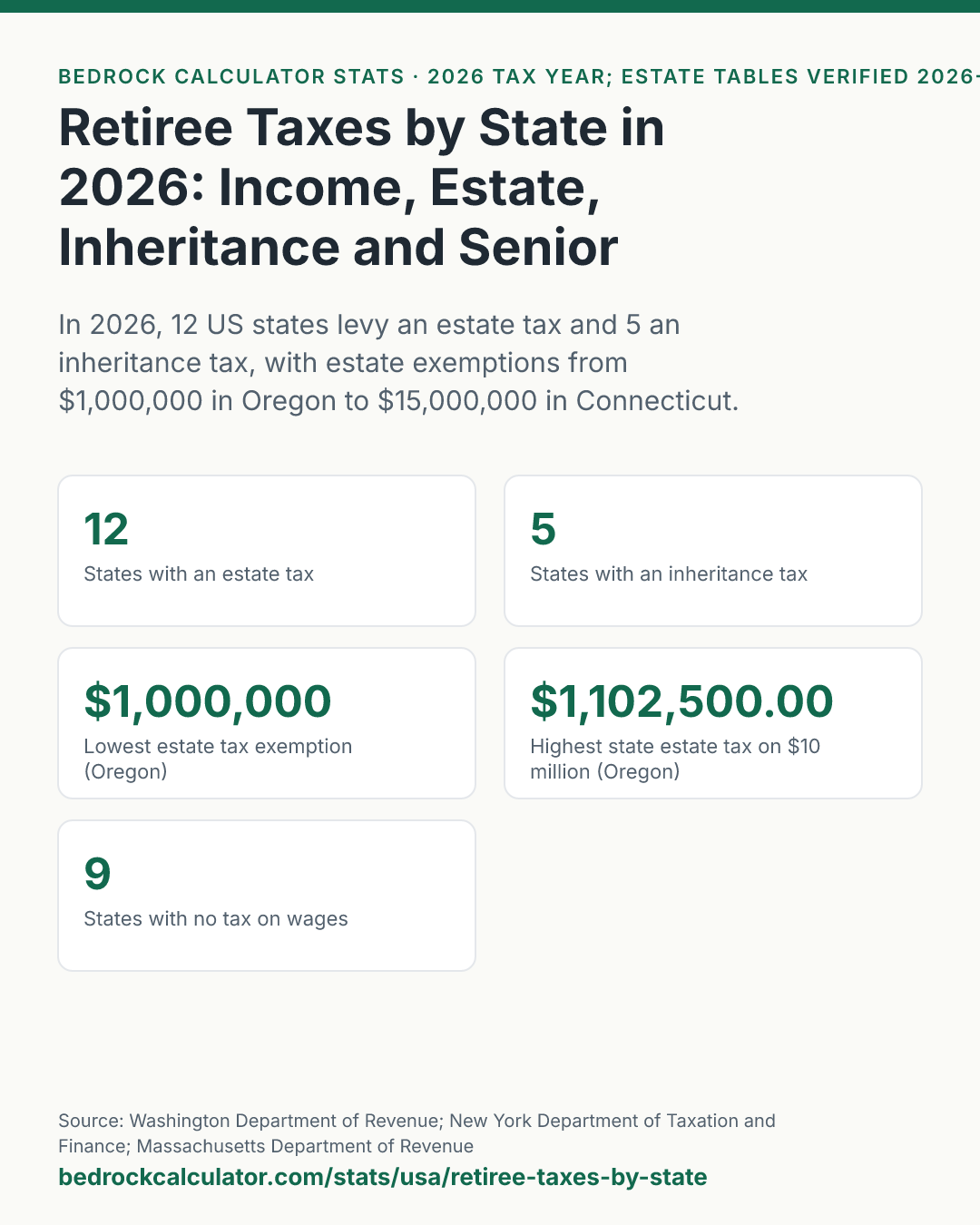
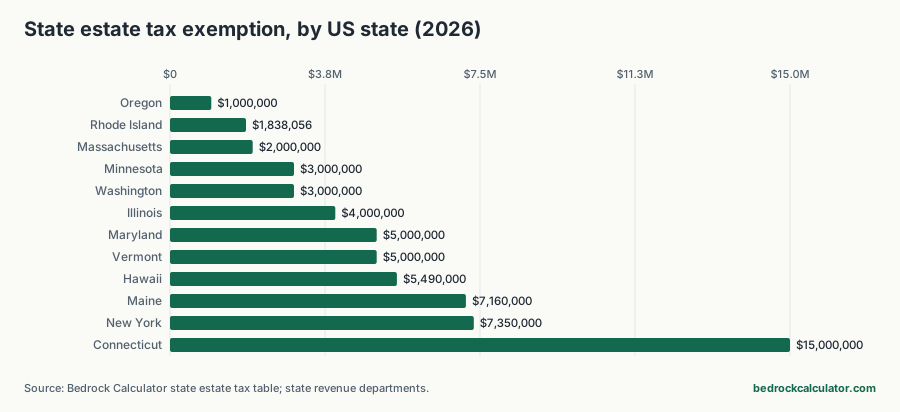
In 2026, 12 states levy an estate tax: Connecticut, Hawaii, Illinois, Maine, Maryland, Massachusetts, Minnesota, New York, Oregon, Rhode Island, Vermont and Washington. 5 states levy an inheritance tax: Kentucky, Maryland, Nebraska, New Jersey and Pennsylvania. Maryland has both. Estate tax exemptions range from $1,000,000 in Oregon to $15,000,000 in Connecticut, so the same estate can owe a large bill in one state and nothing in another.
How we put this together
We used three kinds of source, and each column in the table says which.
- Taxes on wages. We ran the paycheck calculator on a $50,000 salary in each state. 9 states take nothing from wages: Alaska, Florida, Nevada, New Hampshire, South Dakota, Tennessee, Texas, Washington and Wyoming.
- Estate tax. Exemptions come from the state estate tax table behind the site's estate calculators, and the tax on a $5,000,000 and a $10,000,000 estate comes from the same engine those calculators use, at each state's 2026 schedule with no deductions. Washington changed its schedule partway through 2026; we use the one for deaths on or after July 1.
- Inheritance tax and property tax relief. Inheritance tax comes from the engine's inheritance tax table. Property tax relief for older homeowners is flagged only where our verified state research ties it to age, with the source linked.
There's one important gap. The site's engine doesn't model how each state taxes Social Security, pensions or IRA withdrawals, and those rules vary a lot. So we don't rank states on retirement income tax. A state that taxes wages may still exempt most retirement income, and the reverse can happen too. Where our verified sources state a retirement income rule, it appears in the table: so far that's Iowa, Kentucky, Rhode Island and Wisconsin.
The full picture, state by state
Sort by any column. An n/a in the relief or retirement columns means we haven't verified that state yet, not that it has no relief.
Retiree tax picture by US state, 2026
Download CSVFacts, not a ranking. Wage tax from the paycheck calculator at $50,000. Estate tax from the engine at 2026 schedules (Washington: deaths on or after July 1, 2026). Senior relief: Yes where a verified state source ties property tax relief to age; the rule itself is on the homestead exemptions page. Retirement income rules quoted from verified state sources; n/a means not yet verified, not that none exists.
| Alabama | Yes | n/a | n/a | n/a | No | Yes | n/a |
| Alaska | No | n/a | n/a | n/a | No | Yes | n/a |
| Arizona | Yes | n/a | n/a | n/a | No | n/a | n/a |
| Arkansas | Yes | n/a | n/a | n/a | No | Yes | n/a |
| California | Yes | n/a | n/a | n/a | No | n/a | n/a |
| Colorado | Yes | n/a | n/a | n/a | No | Yes | n/a |
| Connecticut | Yes | $15,000,000 | $0.00 | $0.00 | No | n/a | n/a |
| Delaware | Yes | n/a | n/a | n/a | No | Yes | n/a |
| Florida | No | n/a | n/a | n/a | No | n/a | n/a |
| Georgia | Yes | n/a | n/a | n/a | No | n/a | n/a |
| Hawaii | Yes | $5,490,000 | $0.00 | $531,400.00 | No | Yes | n/a |
| Idaho | Yes | n/a | n/a | n/a | No | n/a | n/a |
| Illinois | Yes | $4,000,000 | $285,714.29 | $926,923.08 | No | Yes | n/a |
| Indiana | Yes | n/a | n/a | n/a | No | n/a | n/a |
| Iowa | Yes | n/a | n/a | n/a | No | Yes | Because Iowa starts from federal taxable income, it conforms to the federal no-tax-on-tips, no-tax-on-overtime, car-loan-interest and enhanced senior deductions enacted July 4, 2025. |
| Kansas | Yes | n/a | n/a | n/a | No | n/a | n/a |
| Kentucky | Yes | n/a | n/a | n/a | Yes | Yes | Retirees of the federal government, the Commonwealth, or a Kentucky local government can exclude up to $31,110 of pension income, or more for service before January 1, 1998, using Schedule P. |
| Louisiana | Yes | n/a | n/a | n/a | No | n/a | n/a |
| Maine | Yes | $7,160,000 | $0.00 | $227,200.00 | No | n/a | n/a |
| Maryland | Yes | $5,000,000 | $0.00 | $800,000.00 | Yes | n/a | n/a |
| Massachusetts | Yes | $2,000,000 | $292,000.00 | $968,000.00 | No | n/a | n/a |
| Michigan | Yes | n/a | n/a | n/a | No | n/a | n/a |
| Minnesota | Yes | $3,000,000 | $260,000.00 | $910,000.00 | No | n/a | n/a |
| Mississippi | Yes | n/a | n/a | n/a | No | Yes | n/a |
| Missouri | Yes | n/a | n/a | n/a | No | n/a | n/a |
| Montana | Yes | n/a | n/a | n/a | No | n/a | n/a |
| Nebraska | Yes | n/a | n/a | n/a | Yes | Yes | n/a |
| Nevada | No | n/a | n/a | n/a | No | n/a | n/a |
| New Hampshire | No | n/a | n/a | n/a | No | Yes | n/a |
| New Jersey | Yes | n/a | n/a | n/a | Yes | n/a | n/a |
| New Mexico | Yes | n/a | n/a | n/a | No | Yes | n/a |
| New York | Yes | $7,350,000 | $0.00 | $1,067,600.00 | No | Yes | n/a |
| North Carolina | Yes | n/a | n/a | n/a | No | Yes | n/a |
| North Dakota | Yes | n/a | n/a | n/a | No | Yes | n/a |
| Ohio | Yes | n/a | n/a | n/a | No | Yes | n/a |
| Oklahoma | Yes | n/a | n/a | n/a | No | n/a | n/a |
| Oregon | Yes | $1,000,000 | $425,000.00 | $1,102,500.00 | No | Yes | n/a |
| Pennsylvania | Yes | n/a | n/a | n/a | Yes | n/a | n/a |
| Rhode Island | Yes | $1,838,056 | $303,660.00 | $979,660.00 | No | n/a | Starting with tax year 2025, taxpayers who have reached full retirement age and are under the income limit ($107,000 single, $133,750 joint for 2025) can subtract up to $50,000 of taxable pension, 401(k), 403(b) or annuity income. |
| South Carolina | Yes | n/a | n/a | n/a | No | Yes | n/a |
| South Dakota | No | n/a | n/a | n/a | No | Yes | n/a |
| Tennessee | No | n/a | n/a | n/a | No | Yes | n/a |
| Texas | No | n/a | n/a | n/a | No | Yes | n/a |
| Utah | Yes | n/a | n/a | n/a | No | n/a | n/a |
| Vermont | Yes | $5,000,000 | $0.00 | $800,000.00 | No | n/a | n/a |
| Virginia | Yes | n/a | n/a | n/a | No | Yes | n/a |
| Washington | No | $3,000,000 | $240,000.00 | $1,100,000.00 | No | Yes | n/a |
| West Virginia | Yes | n/a | n/a | n/a | No | Yes | n/a |
| Wisconsin | Yes | n/a | n/a | n/a | No | n/a | Wisconsin does not tax Social Security benefits, military and uniformed services retirement benefits, or railroad retirement benefits. |
| Wyoming | No | n/a | n/a | n/a | No | Yes | n/a |
Estate taxes: where size matters
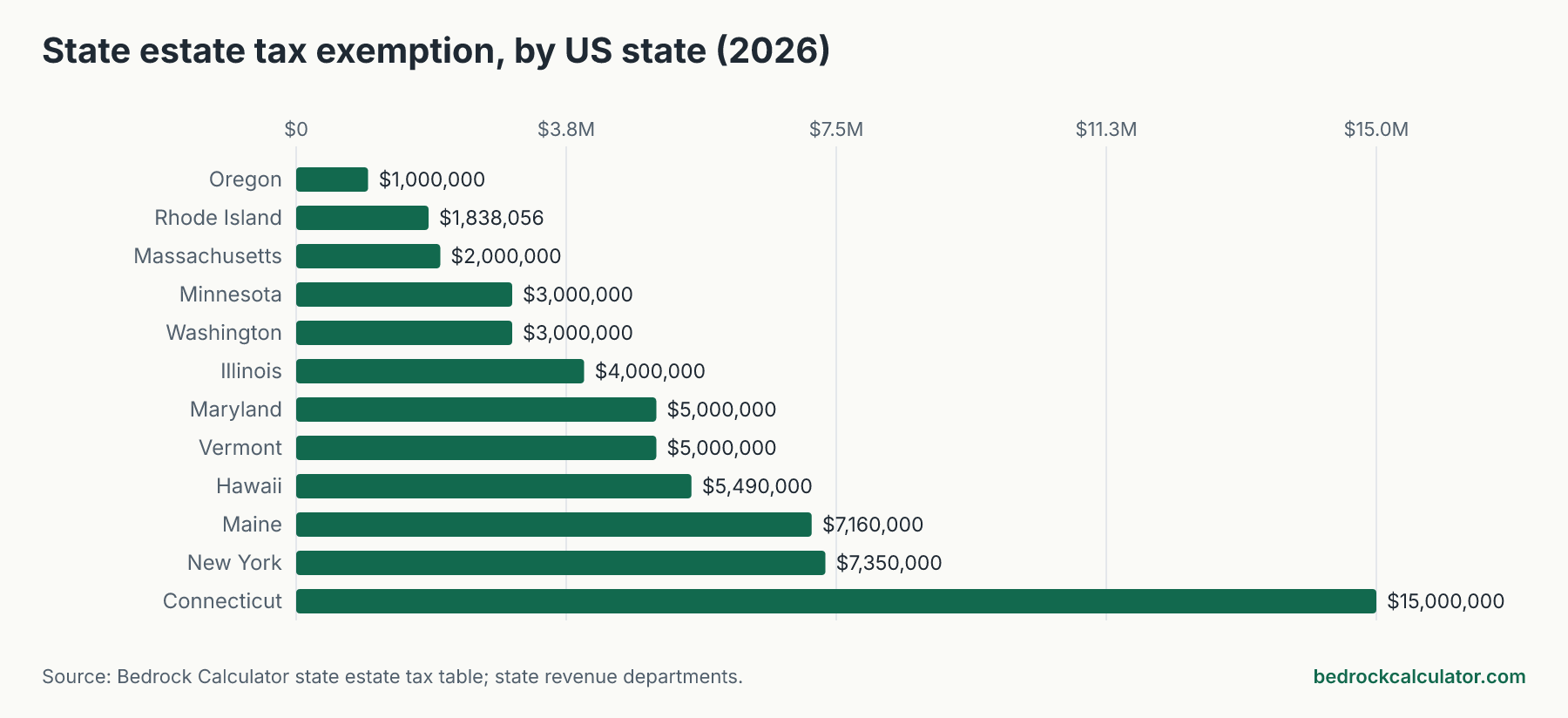
A state estate tax only bites above the exemption, and the exemptions vary enormously. Oregon starts taxing estates above $1,000,000, while Connecticut doesn't start until $15,000,000. Massachusetts starts at $2,000,000, and on a $5,000,000 estate its tax is $292,000.00.
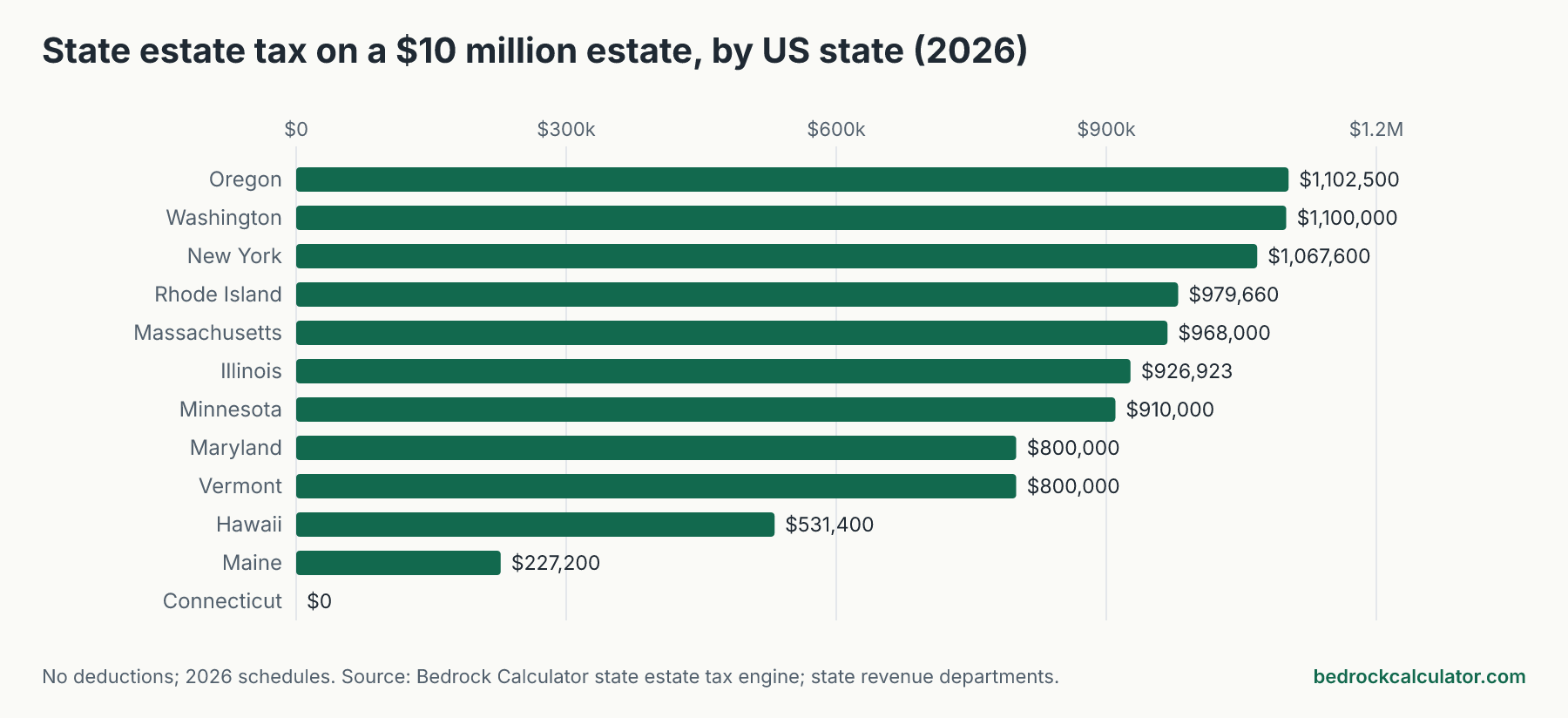
On a $10,000,000 estate, Oregon charges the most at $1,102,500.00. Washington charges $1,100,000.00 and New York $1,067,600.00. Connecticut charges nothing at that size, because its exemption is higher than the estate.
New York has an unusual feature worth knowing: its exemption of $7,350,000 phases out quickly once an estate passes it, so an estate a little above the line can owe tax on its whole value.
These are state taxes only. The federal estate tax has its own, much larger exemption and applies on top. The estate tax calculator handles the federal side, and state calculators such as the Washington estate tax calculator handle each state.
Inheritance taxes: it depends who inherits
An inheritance tax is charged to the person who receives the money, not the estate, and the rate depends on how closely they're related to the person who died. In all 5 states, a surviving spouse pays nothing, and Kentucky, Maryland and New Jersey exempt children too. Pennsylvania and Nebraska tax transfers to adult children at a low rate, with Nebraska allowing an exemption first. Nieces, nephews, friends and other more distant heirs pay the most everywhere. The inheritance tax calculator works out the bill by relationship.
34 states have neither an estate tax nor an inheritance tax.
A $5,000,000 estate: which states send a bill
Exemptions only tell half the story, so we ran the estate engine on an estate of exactly $5,000,000. Of the 12 states with an estate tax, 6 would tax it: Illinois, Massachusetts, Minnesota, Oregon, Rhode Island and Washington. The other estate tax states, Connecticut, Hawaii, Maine, Maryland, New York and Vermont, set their exemption at or above that amount and charge nothing. For a retiree with a paid-off home, retirement accounts and some savings, that dividing line is often the one that matters.
No wage tax is not the same as no death tax
People moving for retirement often look first at whether a state taxes paychecks. That's the wrong filter for an estate plan. Of the 9 states that take nothing from wages, Washington still levies an estate tax. Going the other way, 26 states tax wages but have neither an estate tax nor an inheritance tax, so a state with an income tax can still leave heirs alone.
Property tax help for older owners
The table marks the 26 states where a verified source ties property tax relief to age, but it doesn't reproduce the rules. Those differ too much in form, from exemptions and assessment freezes to deferrals and state-paid credits, to fit in a column. Our homestead exemptions and assessment caps by state page answers that question on its own: it quotes each state's rule word for word with its source and prices what an exemption is worth at each state's tax rate, while this page stays on the taxes that fall on what a retiree earns and leaves behind.
What this page doesn't cover
- Taxes on retirement income beyond the few verified rules shown. Check your state's revenue department for how it treats Social Security, pensions and retirement account withdrawals.
- Sales tax and the cost of living, which matter a great deal on a fixed income.
- Gift taxes, and the details of how estate and inheritance taxes interact with trusts and lifetime gifts.
- The District of Columbia, which has an estate tax but sits outside the 50-state engine.
Run your own numbers
Use the retirement calculator to plan income, the estate tax calculator and inheritance tax calculator for what your heirs might owe, and the property tax calculator for the home you plan to keep.